We have all heard an election-load of John McCain bashing in the far Right Wing press lately. Rush Limbaugh, Sean Hannity, Ann Coulter, and the lesser infotainers are working feverously to make their listeners believe all sorts of things about McCain. They are going after him like a pack of starving dogs that have spotted fresh meat. Last week Limbaugh went as far as to say that a McCain nomination would "destroy the Republican Party," and that "[he] can see possibly not voting for the Republican nominee".
You have to wonder if these people would have allowed Ronald Reagan to be nominated. After all, in his farewell address in 1989 Reagan talked about free trade and immigration when he said, "I've spoken of the shining city all my political life, but I don't know if I ever quite communicated what I saw when I said it. But in my mind it was a tall, proud city built on rocks stronger than oceans, windswept, God-blessed and teeming with people of all kinds living in harmony and peace; a city with free ports that hummed with commerce and creativity. And if there had to be city walls, the walls had doors and the doors were open to anyone with the will and heart to get here." Or how about his famous line, “concentrated power has always been the enemy of liberty” in reference to a sustained political majority? Does that sound like someone that Limbaugh, Hannity, or Coulter would have supported for president?
So why are they fighting so hard to keep McCain out? Is it that he is a moderate conservative by today’s standards? Is it because he is willing to step across the isle to make peace to ensure that legislation gets passed? Or is it because they don’t understand that putting the party above the needs of the country is what got them in this mess in the first place? Maybe it is because they are afraid of moderation and fear a country that no longer sees only red and blue.
After seeing the results on Super Tuesday, it is apparent that the public at large is no longer buying the message that these far right wing media personalities are presenting. The voters see McCain for what he is: a stereotypical old-school conservative who prides himself on honesty, being fiscally conservative in most cases, not being beholden to special interests, and with a resume that says, "been there, done that" instead of "found a way out and profited from it”.
The other fallout from Super Tuesday is that it is now apparent that the light on both mainstream Neoconservatives and Authoritarians is fading. Everywhere we look there are signs of desperation. Books such as Liberal Fascism by Jonah Goldberg wildly explain how all liberals are actually Nazis, Ann Coulter threatens to back Hillary Clinton, and the radio is abuzz with angry hosts bashing McCain for having moderate tendencies and occasionally agreeing with (gasp) the other side.
I for one welcome the change in Republican leadership. Too long has the far Right Wing Media held captive the party by making the public believe that the being a Republican means that you do what you are told and that victory must come at the cost of the nation. This week the voters chose McCain as the best chance for restoring both dignity and creditability to the Republican Party, let’s hope that the media catches up soon.
Wednesday, February 13, 2008


Tuesday, February 12, 2008
My Editor
One of my best friends has turned into my editor, and this is a good thing. She corrects almost all of my blog posts, essays, publications, and important emails. I really don’t know what I would do without her. It’s strange to have one of your friends in a semi-professional role, but she seems to fit it well.
I will hand her my work and she will do an odd thing. There in front of me, she will transform from a normally effervescent little blonde girl into the Scottish Presbyterian minister, Rev. Maclean, from Norman Maclean classic semi-autobiographical, and world’s best fishing novella, A River Runs Through It. And I will end up standing there staring at me feet and waiting for a curt "good, now make it half as long" or similar criticism of whatever it was that I thought was at least passable.
There are, of course, some drawbacks to having an excellent editor in your professional life. After spending hours working on something that I think is witty or intelligent, she will read through it and, instead of commenting on its absolute brilliance, will say something along the lines of, “you missed one comma and a couple apostrophes”. To which I will glare at her and immediately troll for some sort of compliment. “So, what did you think?”
“It’s good,” she’ll say, “This third sentence doesn’t make any sense. Work on that.” Then I go back and make revisions. Honestly, I’m never sure how anything I write will be received because of her cool and businesslike manner.
She has recently decided to head back to school and pursue an MFA. I anticipate her becoming a world-class fiction writer and can only hope that she charges the same amount to review my work when that happens.
So if you have read any of my work (blogs, essays, newspaper articles, whatever’s…) thank Kate for helping me to make my jejune cerebration coherent. (And for usually stopping me from writing sentences like the previous one).
Disclaimer: This post was in no way edited by Kate. Sorry.
I will hand her my work and she will do an odd thing. There in front of me, she will transform from a normally effervescent little blonde girl into the Scottish Presbyterian minister, Rev. Maclean, from Norman Maclean classic semi-autobiographical, and world’s best fishing novella, A River Runs Through It. And I will end up standing there staring at me feet and waiting for a curt "good, now make it half as long" or similar criticism of whatever it was that I thought was at least passable.
There are, of course, some drawbacks to having an excellent editor in your professional life. After spending hours working on something that I think is witty or intelligent, she will read through it and, instead of commenting on its absolute brilliance, will say something along the lines of, “you missed one comma and a couple apostrophes”. To which I will glare at her and immediately troll for some sort of compliment. “So, what did you think?”
“It’s good,” she’ll say, “This third sentence doesn’t make any sense. Work on that.” Then I go back and make revisions. Honestly, I’m never sure how anything I write will be received because of her cool and businesslike manner.
She has recently decided to head back to school and pursue an MFA. I anticipate her becoming a world-class fiction writer and can only hope that she charges the same amount to review my work when that happens.
So if you have read any of my work (blogs, essays, newspaper articles, whatever’s…) thank Kate for helping me to make my jejune cerebration coherent. (And for usually stopping me from writing sentences like the previous one).
Disclaimer: This post was in no way edited by Kate. Sorry.
Wednesday, February 06, 2008
Thursday, January 31, 2008
Welcome to Michigan, Please Lie to Us
Several weeks ago Mitt Romney won our Republican primary by blatantly misleading the people of Michigan. I can’t see how anyone living within our state borders believed him. It was put best by last weekend’s Wait, Wait... Don’t Tell Me on NPR:
During election time people get stupid and believe a) wildly unbelievable crap and b) that the president actually has the power to change most things.
The president is head of only one branch of the government. Sure, the Bush Administration has worked very hard to dissolve the other two branches, but they still exist and will remain. Moderation and balance will always be restored, but that is a different argument. So this leaves the President with the ability to make or stop wars, appoint individuals to political posts, and make appeals directly to the public for either support or condemnation of certain policies. Any serious changes must be approved in the Senate and pass through the Justice system. This check and balance assures, for the most part, that the president does not have nearly enough power to make and serious changes alone.
So during any election you are going to hear a bunch of election promises that are destine to be broken. These broken campaign promises lead to an overall apathy with voters, a stereotype of lying politicians, and, eventually, a lower voter turnout. Election promises in this country have been around since we have had elections and will always continue, but it is the seeing these promises as the BS that they are that quells their tide and ultimately defeats their pushers.
Mitt Romney promised the impossible to Michigan because he was under incredibly strong pressure to win this state. There is no way that the jobs that we have lost are coming back. The new plants have been built elsewhere, new employees have been trained, and profits have increased for the companies. There is no reason why these companies would ever move back. He knows this and we know this. So why, why did he do it?
Was it that our local inhabitants are so desperate to believe that there will be jobs coming back to Michigan that they are willing to set aside reality and believe these empty promises?
Have we lost so much hope in ourselves that fantasy presents itself as a viable alternative?
Or is it that he knew that we would rather be openly lied to then to have to deal with the reality of our current situation?
I am afraid that it is all three. So here, let me welcome all future political candidates to Michigan and remind them to please lie to us, because it’s obviously what we want to hear.
Governor Mitt Romney won Michigan, a state where his father was governor and where he promised the people he'd bring twenty billion dollars in subsidies, that he would bring back all the auto manufacturing jobs lost during the last few decades, and that he would spend his fortune to build a dome over the greater Detroit area so that they could grow palm trees. That's good and it worked but the big question is with three major primaries in three winners who are going to be the nominee. Given that every leading candidate is hated by a larger constituency than the one that supports him, we anticipate a brokered convention this summer with a nomination finally going to a signed eight by ten photo of Ronald Reagan hanging on a coat rack.
During election time people get stupid and believe a) wildly unbelievable crap and b) that the president actually has the power to change most things.
The president is head of only one branch of the government. Sure, the Bush Administration has worked very hard to dissolve the other two branches, but they still exist and will remain. Moderation and balance will always be restored, but that is a different argument. So this leaves the President with the ability to make or stop wars, appoint individuals to political posts, and make appeals directly to the public for either support or condemnation of certain policies. Any serious changes must be approved in the Senate and pass through the Justice system. This check and balance assures, for the most part, that the president does not have nearly enough power to make and serious changes alone.
So during any election you are going to hear a bunch of election promises that are destine to be broken. These broken campaign promises lead to an overall apathy with voters, a stereotype of lying politicians, and, eventually, a lower voter turnout. Election promises in this country have been around since we have had elections and will always continue, but it is the seeing these promises as the BS that they are that quells their tide and ultimately defeats their pushers.
Mitt Romney promised the impossible to Michigan because he was under incredibly strong pressure to win this state. There is no way that the jobs that we have lost are coming back. The new plants have been built elsewhere, new employees have been trained, and profits have increased for the companies. There is no reason why these companies would ever move back. He knows this and we know this. So why, why did he do it?
Was it that our local inhabitants are so desperate to believe that there will be jobs coming back to Michigan that they are willing to set aside reality and believe these empty promises?
Have we lost so much hope in ourselves that fantasy presents itself as a viable alternative?
Or is it that he knew that we would rather be openly lied to then to have to deal with the reality of our current situation?
I am afraid that it is all three. So here, let me welcome all future political candidates to Michigan and remind them to please lie to us, because it’s obviously what we want to hear.
Thursday, January 24, 2008
Good Morning
I don’t sleep very much, maybe a couple of hours every night, and any more and I’m exhausted and worthless all day. It’s just the way that I am and I’m comfortable with it. During the time when everyone else sleeps, I usually read or write and that makes me happy. The other morning, while watching the sun rise over a fresh blanket of snow, I realized that most people will never know the quiet of the morning and how it is a constant balance of delicate silence and unlimited potential. It is that time, before the world wakes, that is mine. I covet it and it really is truly precious to me. I wish that I could share with each of you the serenity of the hours you waste asleep, but I’m sure you would all just extol the virtues of a good deep rest. So, for now, I get my time and hope that all of you wake rested and prepared for a new day.
Wednesday, January 23, 2008
Entry for January 23, 2008
On any given day the news is barely interesting enough to maintain someone’s interest for the shortest period of time. This is because everyday news pales in comparison to the average person’s life, is far less interesting, and rarely pertains directly to them. This leaves those in the news business trying all sorts of things in an attempt to grab the attention of viewers. No where is this more obvious than during an election season. Like eight-year-olds chasing a ball around a soccer field, organization is completely lost and the only objective is to frantically follow wherever the target may bounce.
This format only works to give fodder for the real bread and butter of the cable channel news networks. I will never quite understand the appeal of the talking heads of the infotainment world. It’s the same thing on almost all channels. A loud host talking far more they have coherent thoughts to support all to set up a fight between the in-your-face over 40 neoconservative talk show host yelling, pointing, and claiming that he’s right because everyone else is wrong while the liberal guest or co-host rolls his eyes and counters with some statement about “facts” before trailing off in exasperation once he has gotten in several shots about the conservatives view of reality and/or intelligence.
The conservative is either a pseudo-bad-ass who is against a world that won’t see reality and the liberal is someone who tries to talk over everyone, taking the moral and intellectual highroad, while simultaneously destroying his own argument. The same thing is on every channel, with the political bend coming from who the channel matches against whom and who has control over the mic.
What seems to further baffle me is that not only do these infotainers propagate the conservative and liberal stereotypes, normal people feel the need to carry on in their same vein -- as if they too need be that shallow, desperate, and one-dimensional in order to understand what it is that they are arguing. This may be the free world, but free thinking is usually in short supply.
All of this then roles back into the assault that the daily news does on our senses. The positions are assumed; the vague, leading, or horrible questions lobbed; and the waiting for any blood is sought so hungrily that everyone sits, salivating mouth in hand, waiting to be fed another morsel of mildly interesting that they can describe as the best tasting, most interesting thing that has ever been experienced. I, for one, find all of it unpalatable.
This format only works to give fodder for the real bread and butter of the cable channel news networks. I will never quite understand the appeal of the talking heads of the infotainment world. It’s the same thing on almost all channels. A loud host talking far more they have coherent thoughts to support all to set up a fight between the in-your-face over 40 neoconservative talk show host yelling, pointing, and claiming that he’s right because everyone else is wrong while the liberal guest or co-host rolls his eyes and counters with some statement about “facts” before trailing off in exasperation once he has gotten in several shots about the conservatives view of reality and/or intelligence.
The conservative is either a pseudo-bad-ass who is against a world that won’t see reality and the liberal is someone who tries to talk over everyone, taking the moral and intellectual highroad, while simultaneously destroying his own argument. The same thing is on every channel, with the political bend coming from who the channel matches against whom and who has control over the mic.
What seems to further baffle me is that not only do these infotainers propagate the conservative and liberal stereotypes, normal people feel the need to carry on in their same vein -- as if they too need be that shallow, desperate, and one-dimensional in order to understand what it is that they are arguing. This may be the free world, but free thinking is usually in short supply.
All of this then roles back into the assault that the daily news does on our senses. The positions are assumed; the vague, leading, or horrible questions lobbed; and the waiting for any blood is sought so hungrily that everyone sits, salivating mouth in hand, waiting to be fed another morsel of mildly interesting that they can describe as the best tasting, most interesting thing that has ever been experienced. I, for one, find all of it unpalatable.
Monday, January 21, 2008
Coffee Shop Inhabitants (add to me)
While sitting at a coffee shop I realized that there are several distinct personalities that tend to frequent this type of establishment. So I started the list below and it has since been added to by people more talented than I am. Please feel free to add to it:
The first and most obvious is the Loud Talker. This male, and it's usually a male, talks to everyone in a voice more properly suited for a canyon echo. All within ear shot cannot only hear the entire conversation that the Loud Talker is conducting, they've created an internal dialog with him over a) how they would respond to the other side of the conversation and b) all of the different ways in which they would like to tell him to shut up.
The next is the Living Room Dweller. Conducting business usually reserved for the privacy of ones own house on a work at home day, this model tends to spread out and claim all areas surrounding him. No topic is off limits, no conversation inappropriate, and no business accessory has been excluded from his table. This model is inclined to take off shoes, hoard all power outlets, and, somehow, make an entire fax machine materialize out of his bag.
There is always the 2+ Gaggle of Gossiping Girls who, no matter of what age will chitter on endlessly about the most inane things possible and increasing decibel and pitch. At some point their conversation we'll degrade into a high-speed squeaking with only an occasional comprehensible word about celebrity, personal hygiene, or shopping.
You can always identify the iPod Human because of the white wires leading from their dramatically places iPod directly to their down turned head. Occasionally this person will fumble with said iPod in a combination gesture to make sure that you see that they do indeed own an iPod and because they cannot find the right song to express the ambiguity of their contentment that they have a soundtrack to life and you must deal directly with people in your non-musical hell.
The Writer is there to be inspired to write. To let the pages flow in a rhythmic procession of nuance and substantiated prose while building to a crescendo of literary gold that can only be fueled on by caffeine and the knowledge that everyone is watching them write. They know that without the external stimulation through everyone's acknowledgment of the fact that they are indeed writing, the writer would be writing for nothing besides themselves.
The Regular is there like clockwork on a specific day at a specific time. He or she knows the name of every one of the proprietor's children, grandchildren, and pets, and will be the first to bring in any newspaper clipping containing mention of any of the above. The Regular's drink is always out on the counter before he or she steps into the establishment and, speaking in tones almost on par with the Loud Talker, ensures that everyone knows that he or she knows the owner and his or her family personally. This makes the Regular a more important customer than anyone else. On the day that the Regular doesn't show at the prescribed time, it is assumed that he or she has gotten into some horribly disfiguring accident and the coffee shop will expressly fold without his or her patronage.
If you are missing any of the current events magazines or newspapers from the rack, they are undoubtedly at the table of the Waspy Couple. This husband and wife, usually middle-aged, is easily spotted at the coffee shop after church on Sundays in their finest. They will calmly discuss the week's news over swapping each section of the paper, and not a visit to the coffee shop goes by without the husband asking the wife, at least once, to remind him to pencil in this or that auction or event into his calendar when he gets home. No topic is off limits or, like the Living-Room Dweller, inappropriately too private. Though they do not expel bank account numbers to the entire shop, they will make sure the whole place knows how much they donated to the trendiest charity last month.
The Student has decided that the school library, a room built with the sole purpose of allowing a student to have the resources, space, and comfort for optimal studying, is just not up to the standard of their educational needs and has sought out a busy coffee shop as a reasonable alternative. Unfortunately, the Student will spend most of their time casting divisive glances and threatening sighs towards everyone else who dares to breathe too loudly in this public place. Not lasting long, the Student will give up and move to a new coffee shop every 30 minutes.
LAN Party Over Here! is almost always present in the form of several younger people, located within feet of each other, typing frantic messages to the person within arms reach. Also easily recognizable because of the occasional outbursts of synchronized laughing and occasionally laptop swapping. Expect this group to consume the largest amount of caffeinated beverages and make the biggest mess. Most coffee shop LAN Party Over Here! groups emanate from being outcast from one, if not all of the group members' parents' homes.
An uplifting member of the coffee shop culture is the Happy to be Breathing. They are overjoyed at everything. If the little old woman asks the little old man if he wants a prune spiced bran muffin, he will excitedly say, "Yes! I'd love a prune spiced bran muffin!" and after consuming said muffin he will wipe the saliva off the corners of his mouth with a hankie and proclaim, in as booming a voice as his shriveling vocal chords can manage, "That was the best prune spiced bran muffin I've ever had!"
The first and most obvious is the Loud Talker. This male, and it's usually a male, talks to everyone in a voice more properly suited for a canyon echo. All within ear shot cannot only hear the entire conversation that the Loud Talker is conducting, they've created an internal dialog with him over a) how they would respond to the other side of the conversation and b) all of the different ways in which they would like to tell him to shut up.
The next is the Living Room Dweller. Conducting business usually reserved for the privacy of ones own house on a work at home day, this model tends to spread out and claim all areas surrounding him. No topic is off limits, no conversation inappropriate, and no business accessory has been excluded from his table. This model is inclined to take off shoes, hoard all power outlets, and, somehow, make an entire fax machine materialize out of his bag.
There is always the 2+ Gaggle of Gossiping Girls who, no matter of what age will chitter on endlessly about the most inane things possible and increasing decibel and pitch. At some point their conversation we'll degrade into a high-speed squeaking with only an occasional comprehensible word about celebrity, personal hygiene, or shopping.
You can always identify the iPod Human because of the white wires leading from their dramatically places iPod directly to their down turned head. Occasionally this person will fumble with said iPod in a combination gesture to make sure that you see that they do indeed own an iPod and because they cannot find the right song to express the ambiguity of their contentment that they have a soundtrack to life and you must deal directly with people in your non-musical hell.
The Writer is there to be inspired to write. To let the pages flow in a rhythmic procession of nuance and substantiated prose while building to a crescendo of literary gold that can only be fueled on by caffeine and the knowledge that everyone is watching them write. They know that without the external stimulation through everyone's acknowledgment of the fact that they are indeed writing, the writer would be writing for nothing besides themselves.
The Regular is there like clockwork on a specific day at a specific time. He or she knows the name of every one of the proprietor's children, grandchildren, and pets, and will be the first to bring in any newspaper clipping containing mention of any of the above. The Regular's drink is always out on the counter before he or she steps into the establishment and, speaking in tones almost on par with the Loud Talker, ensures that everyone knows that he or she knows the owner and his or her family personally. This makes the Regular a more important customer than anyone else. On the day that the Regular doesn't show at the prescribed time, it is assumed that he or she has gotten into some horribly disfiguring accident and the coffee shop will expressly fold without his or her patronage.
If you are missing any of the current events magazines or newspapers from the rack, they are undoubtedly at the table of the Waspy Couple. This husband and wife, usually middle-aged, is easily spotted at the coffee shop after church on Sundays in their finest. They will calmly discuss the week's news over swapping each section of the paper, and not a visit to the coffee shop goes by without the husband asking the wife, at least once, to remind him to pencil in this or that auction or event into his calendar when he gets home. No topic is off limits or, like the Living-Room Dweller, inappropriately too private. Though they do not expel bank account numbers to the entire shop, they will make sure the whole place knows how much they donated to the trendiest charity last month.
The Student has decided that the school library, a room built with the sole purpose of allowing a student to have the resources, space, and comfort for optimal studying, is just not up to the standard of their educational needs and has sought out a busy coffee shop as a reasonable alternative. Unfortunately, the Student will spend most of their time casting divisive glances and threatening sighs towards everyone else who dares to breathe too loudly in this public place. Not lasting long, the Student will give up and move to a new coffee shop every 30 minutes.
LAN Party Over Here! is almost always present in the form of several younger people, located within feet of each other, typing frantic messages to the person within arms reach. Also easily recognizable because of the occasional outbursts of synchronized laughing and occasionally laptop swapping. Expect this group to consume the largest amount of caffeinated beverages and make the biggest mess. Most coffee shop LAN Party Over Here! groups emanate from being outcast from one, if not all of the group members' parents' homes.
An uplifting member of the coffee shop culture is the Happy to be Breathing. They are overjoyed at everything. If the little old woman asks the little old man if he wants a prune spiced bran muffin, he will excitedly say, "Yes! I'd love a prune spiced bran muffin!" and after consuming said muffin he will wipe the saliva off the corners of his mouth with a hankie and proclaim, in as booming a voice as his shriveling vocal chords can manage, "That was the best prune spiced bran muffin I've ever had!"
Wednesday, January 09, 2008
Baby Registry & Shower
Sunday, January 06, 2008
Friday, January 04, 2008
Incredible article from the Humanist
The Post-Theological Umbrella
by David Niose
Published in the Humanist, January/February 2008
Surely one of the biggest barriers keeping humanism from being a more prominent force in the United States is its nontheistic character. Two relevant surveys provide compelling proof that Americans just don't feel good about openly rejecting belief in a divinity:
The University of Minnesota results no doubt help to explain the results of the ARIS survey. That is, the fact that atheists are so vilified explains why only less than 1 percent of the population will identify as atheist, even though over 13 percent will identify as secular/nonreligious.
For humanist activists trying to advance their worldview in a culture that discourages open nontheism, there have traditionally been two ways of dealing with this issue. Some do so by trying to hide the nontheistic nature of humanism, avoiding discussion of nontheism with the hope that maybe nobody will notice it. This approach rarely works, however, because most discussions of humanism with nonhumanists inevitably result in the question: So are humanists atheists?
Another way to address the issue is to attempt to improve the public's perception of the atheist identity. This is a worthy goal, and surely it should be encouraged. Given time, the image of atheism in America might improve, as people slowly realize that atheists are more likely to be found in research labs than in prisons or drug hideouts. But this approach, even if it works, will take time, and one must consider whether other strategies might be possible.
This question of atheism, and specifically how the public's poor image of atheists makes the advancement of humanism difficult, became a topic of discussion with a friend at a recent conference. Her response pointed to a third way to address the issue: "When people ask me about atheism," she said, "I just tell them I consider myself post-theological."
How brilliant, I thought. Rather than discuss and debate the existence of God, she focuses attention on the concept of theology itself. She dismisses not God, but the entire notion of theology as an area of inquiry that is worthy of consideration. By calling herself post-theological, she isn't making the rejection of God-belief the key ingredient in her identity; she is pointing out that, from a historical perspective, theological inquiry itself is no longer a valid means of finding truth or morality.
In fact, my friend's historical view of theology is accurate. Before humans reached the level of intelligence necessary for theological inquiry, our ancestors were in what might be called the "pre-theological" stage. Like other animals, our distant ancestors lacked the intelligence necessary to achieve theological thought. But at some point in our historical development humans became intelligent enough to ask deep questions about the world, such as: How did we get here? Who made this place? Why does the sun rise, and why does lightning strike? What happens to us when we die? These are big questions that can only be asked by an animal with remarkable intelligence.
Interestingly, though the human animal became smart enough to ask such deep questions, it wasn't smart enough to answer them accurately. And that's where theology came in. Lacking true scientific knowledge to answer these deep questions, humans instead speculated, inventing myths, superstitions, and tribal doctrines to provide answers. In doing so, they left the pre-theological stage and entered the theological stage of their development.
It's noteworthy that humans aren't the first animals to reach the theological stage. Scientists tell us that our older cousins, the Neanderthals, buried their dead and had religious relics that suggest that they also asked deep questions that required theological answers. Hence, we can see that theological speculation is a natural stage in the development of extremely advanced animals.
It's also noteworthy that theology, once invented, had significant survival value as a human institution. That is, the religious rituals and beliefs of a clan or tribe became imbedded in its culture, helping to bind the in-group together and separate it from out-groups that had different beliefs and rituals. And as human organization and civilization changed, becoming more complex, theological concepts have been able to adapt and change as well, always serving numerous social and political purposes. This process continues even today.
From pre-theological to theological, the human species still faces another stage in its development. As it continues to acquire knowledge and understanding of the universe, the human animal finds that it is answering many of the deep questions that were once left to religious speculation--questions of universal origins, natural history, the development of life, and the explanation of natural phenomena. In fact, having filled many of the gaps in knowledge that were once explained by religion, and having confidence that the remaining gaps can be explained without religious superstition as well, some humans now conclude that the entire theological approach no longer has relevance. Such humans are reaching the post-theological stage.
From the standpoint of a humanist activist, it's important to recognize that the post-theological view is one that focuses on the big picture, not the singular issue of the existence or nonexistence of a divinity. In fact, the post-theological view can even acknowledge the psychological inclinations that are common in a still-theological society, where religious belief has traditionally been widespread. Since the vast majority of us grew up in households that were theological, we recognize that the transition from the theological mindset to the post-theological mindset isn't easily made, at a personal level or societal level.
Because of this recognition, and because the post-theological view is not one that must overtly attack the notion of God itself, the umbrella of post-theological identity can be a big one. As the 2001 ARIS survey showed, very few who were raised in our theologically inclined society will openly accept the "atheist" identity, even though over 13 percent will identify as not religious. But it's likely that many who aren't religious would gladly accept the term post-theological as a less threatening alternative.
In fact, one can even have a post-theological outlook while acknowledging a personal psychological tendency to sympathize with theistic notions. So long as one recognizes those notions for what they are--psychological leftovers from the recent past--one can associate with the post-theological movement without a feeling of inconsistency.
Open rejection of a divinity is very difficult for most Americans because "God" has personal characteristics that are often etched deeply into the psyche. To some who were raised in a religious environment, there can be a feeling that the concept of God, and even more specific concepts such as Jesus as the son of God and the Virgin Mary, are an integral part of one's being, making the direct rejection of them possible only for the most disciplined and rational.
But an indirect rejection, via the embrace of the post-theological way of thinking, is less personal and perhaps allows for the psychological wiggle room that many find necessary. If that's difficult to grasp, consider the following alternatives. It's relatively rare that one hears a typical American state: "I'm a lapsed Catholic--I consider myself an atheist" because the label "atheist" is so scorned. But that same person saying: "I'm a lapsed Catholic--I consider myself post-theological" might not be so hard to imagine.
The post-theological identity should be seen as an umbrella term, one that includes not only those who openly identify as atheist, agnostic, and humanist, but also many of those 13 percent, and possibly more, who are simply ambivalent and apathetic about religion. With these natural allies joined under the same umbrella, movement-building can only be made easier.
David Niose, a lawyer in Massachusetts, is a board member and the treasurer of the American Humanist Association and facilitator of Greater Worcester Humanists
by David Niose
Published in the Humanist, January/February 2008
Surely one of the biggest barriers keeping humanism from being a more prominent force in the United States is its nontheistic character. Two relevant surveys provide compelling proof that Americans just don't feel good about openly rejecting belief in a divinity:
A University of Minnesota survey in 2006 found atheists are the most distrusted and disliked minority group in the country.
An American Religious Identification Survey (ARIS) from 2001 indicates that over 13 percent of the population identifies as secular/nonreligious, but only 1 percent identify as atheist, agnostic, or humanist.
The University of Minnesota results no doubt help to explain the results of the ARIS survey. That is, the fact that atheists are so vilified explains why only less than 1 percent of the population will identify as atheist, even though over 13 percent will identify as secular/nonreligious.
For humanist activists trying to advance their worldview in a culture that discourages open nontheism, there have traditionally been two ways of dealing with this issue. Some do so by trying to hide the nontheistic nature of humanism, avoiding discussion of nontheism with the hope that maybe nobody will notice it. This approach rarely works, however, because most discussions of humanism with nonhumanists inevitably result in the question: So are humanists atheists?
Another way to address the issue is to attempt to improve the public's perception of the atheist identity. This is a worthy goal, and surely it should be encouraged. Given time, the image of atheism in America might improve, as people slowly realize that atheists are more likely to be found in research labs than in prisons or drug hideouts. But this approach, even if it works, will take time, and one must consider whether other strategies might be possible.
This question of atheism, and specifically how the public's poor image of atheists makes the advancement of humanism difficult, became a topic of discussion with a friend at a recent conference. Her response pointed to a third way to address the issue: "When people ask me about atheism," she said, "I just tell them I consider myself post-theological."
How brilliant, I thought. Rather than discuss and debate the existence of God, she focuses attention on the concept of theology itself. She dismisses not God, but the entire notion of theology as an area of inquiry that is worthy of consideration. By calling herself post-theological, she isn't making the rejection of God-belief the key ingredient in her identity; she is pointing out that, from a historical perspective, theological inquiry itself is no longer a valid means of finding truth or morality.
In fact, my friend's historical view of theology is accurate. Before humans reached the level of intelligence necessary for theological inquiry, our ancestors were in what might be called the "pre-theological" stage. Like other animals, our distant ancestors lacked the intelligence necessary to achieve theological thought. But at some point in our historical development humans became intelligent enough to ask deep questions about the world, such as: How did we get here? Who made this place? Why does the sun rise, and why does lightning strike? What happens to us when we die? These are big questions that can only be asked by an animal with remarkable intelligence.
Interestingly, though the human animal became smart enough to ask such deep questions, it wasn't smart enough to answer them accurately. And that's where theology came in. Lacking true scientific knowledge to answer these deep questions, humans instead speculated, inventing myths, superstitions, and tribal doctrines to provide answers. In doing so, they left the pre-theological stage and entered the theological stage of their development.
It's noteworthy that humans aren't the first animals to reach the theological stage. Scientists tell us that our older cousins, the Neanderthals, buried their dead and had religious relics that suggest that they also asked deep questions that required theological answers. Hence, we can see that theological speculation is a natural stage in the development of extremely advanced animals.
It's also noteworthy that theology, once invented, had significant survival value as a human institution. That is, the religious rituals and beliefs of a clan or tribe became imbedded in its culture, helping to bind the in-group together and separate it from out-groups that had different beliefs and rituals. And as human organization and civilization changed, becoming more complex, theological concepts have been able to adapt and change as well, always serving numerous social and political purposes. This process continues even today.
From pre-theological to theological, the human species still faces another stage in its development. As it continues to acquire knowledge and understanding of the universe, the human animal finds that it is answering many of the deep questions that were once left to religious speculation--questions of universal origins, natural history, the development of life, and the explanation of natural phenomena. In fact, having filled many of the gaps in knowledge that were once explained by religion, and having confidence that the remaining gaps can be explained without religious superstition as well, some humans now conclude that the entire theological approach no longer has relevance. Such humans are reaching the post-theological stage.
From the standpoint of a humanist activist, it's important to recognize that the post-theological view is one that focuses on the big picture, not the singular issue of the existence or nonexistence of a divinity. In fact, the post-theological view can even acknowledge the psychological inclinations that are common in a still-theological society, where religious belief has traditionally been widespread. Since the vast majority of us grew up in households that were theological, we recognize that the transition from the theological mindset to the post-theological mindset isn't easily made, at a personal level or societal level.
Because of this recognition, and because the post-theological view is not one that must overtly attack the notion of God itself, the umbrella of post-theological identity can be a big one. As the 2001 ARIS survey showed, very few who were raised in our theologically inclined society will openly accept the "atheist" identity, even though over 13 percent will identify as not religious. But it's likely that many who aren't religious would gladly accept the term post-theological as a less threatening alternative.
In fact, one can even have a post-theological outlook while acknowledging a personal psychological tendency to sympathize with theistic notions. So long as one recognizes those notions for what they are--psychological leftovers from the recent past--one can associate with the post-theological movement without a feeling of inconsistency.
Open rejection of a divinity is very difficult for most Americans because "God" has personal characteristics that are often etched deeply into the psyche. To some who were raised in a religious environment, there can be a feeling that the concept of God, and even more specific concepts such as Jesus as the son of God and the Virgin Mary, are an integral part of one's being, making the direct rejection of them possible only for the most disciplined and rational.
But an indirect rejection, via the embrace of the post-theological way of thinking, is less personal and perhaps allows for the psychological wiggle room that many find necessary. If that's difficult to grasp, consider the following alternatives. It's relatively rare that one hears a typical American state: "I'm a lapsed Catholic--I consider myself an atheist" because the label "atheist" is so scorned. But that same person saying: "I'm a lapsed Catholic--I consider myself post-theological" might not be so hard to imagine.
The post-theological identity should be seen as an umbrella term, one that includes not only those who openly identify as atheist, agnostic, and humanist, but also many of those 13 percent, and possibly more, who are simply ambivalent and apathetic about religion. With these natural allies joined under the same umbrella, movement-building can only be made easier.
David Niose, a lawyer in Massachusetts, is a board member and the treasurer of the American Humanist Association and facilitator of Greater Worcester Humanists
Wednesday, January 02, 2008
Call Waiting
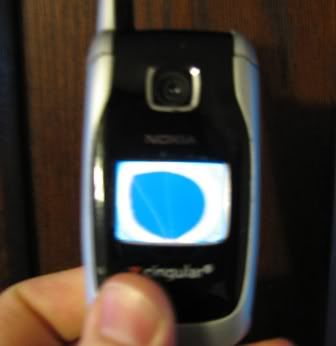
My cell phone is no more.
(In Monty Python/John Cleese voice):
It has ceased to be! It's expired and gone to meet his maker! It’s a stiff! Bereft of life, it rests in peace! If I hadn't put the battery back in it, it would be pushing up the daisies! Its electronic processes are now history! It’s off the twig! It’s kicked the bucket, shuffled off its mortal coil; run down the curtain and joined the bleeding choir invisible!! THIS IS AN EX-CELL PHONE!!
So if you have been waiting for a call from me, or have tried to reach me, I apologize. I know that I am still making up time from being sick, but I know no numbers as it has taken over responsibility for remembering that information.
I should get a new phone here in the next day or two and will immediately call all who have left messages. Until then please feel free to email, but understand that I am at my computer very little this week.
Sunday, December 30, 2007
Entry for December 30, 2007
"Home is a name, a word, it is a strong one; stronger than magician ever spoke, or spirit ever answered to, in the strongest conjuration." - Charles Dickens
The thing about traveling is that, when you have finally returned, you are happy to just no longer be somewhere else. And no matter how short the trip may have been, there are always too many people to contact just to tell them that you’ve returned. Strangely, this number is usually higher than the amount of people who you originally told that you were leaving. So if you did not receive a personal message from me upon my arrival back at home this afternoon, I apologize. But frankly, I’m exhausted from my much needed trip away from life and could use some time to recover.
The thing about traveling is that, when you have finally returned, you are happy to just no longer be somewhere else. And no matter how short the trip may have been, there are always too many people to contact just to tell them that you’ve returned. Strangely, this number is usually higher than the amount of people who you originally told that you were leaving. So if you did not receive a personal message from me upon my arrival back at home this afternoon, I apologize. But frankly, I’m exhausted from my much needed trip away from life and could use some time to recover.
Monday, December 24, 2007
Home, Sick for the Holidays
I am spending this Christmas not feeling well and trying to hide from the world. If Santa is still looking for a last minute Christmas gift, please tell him to send soup.
Saturday, December 22, 2007
Trapped Near My Inner Circle of Thought
I arrange all of my thoughts through the Loci method of linking them to memories of physical locations within my mind. Each day I rearrange the events and knowledge that I have gathered to fit within my memory palace. Add to this my never-ending ridiculous quest to manage simultaneous thought processes and you have a mind destine for trouble.
Every once in a while my brain crashes and my mental issues manifest as physical problems. When I was younger this did not happen that often, but now that I am older, rearranging more, and try to remember more intricate and deeper thoughts, it is happening with greater frequency. This causes me to completely withdraw from the world and spend countless hours and days rebuilding my mind.
So here I sit, slowly rebuilding my thoughts and trying to recall personal minutia as if it was I was the only person on earth to be entrusted with the knowledge of EFE, Kant's Theory of Judgment, or countless Shakespearean lines. My brain hurts and so my body hurts. I am tired, sick, and empty. I want to go home to my mind of several weeks ago, but it is gone. I know that in time I will rebuild it better and retain most everything. I also hope that someday I will be able to forego these collapses. Until then I’ll keep up my scorching hot balnea and work to stay focused.
Every once in a while my brain crashes and my mental issues manifest as physical problems. When I was younger this did not happen that often, but now that I am older, rearranging more, and try to remember more intricate and deeper thoughts, it is happening with greater frequency. This causes me to completely withdraw from the world and spend countless hours and days rebuilding my mind.
So here I sit, slowly rebuilding my thoughts and trying to recall personal minutia as if it was I was the only person on earth to be entrusted with the knowledge of EFE, Kant's Theory of Judgment, or countless Shakespearean lines. My brain hurts and so my body hurts. I am tired, sick, and empty. I want to go home to my mind of several weeks ago, but it is gone. I know that in time I will rebuild it better and retain most everything. I also hope that someday I will be able to forego these collapses. Until then I’ll keep up my scorching hot balnea and work to stay focused.
Wednesday, December 19, 2007
Who Are You?
Hello I am Professor, Consultant, and Occasional Bookstore Employee. Please feel free to call me Brian.
We’ve all been at some event where some random personal will saunter up, start a conversation, and immediately drop the question “So what do you do?”. My guess is that they think that it’s just a harmless question, but it never is. You know that your answer will be openly judged. If you say, “I’m a homemaker” or “I am the CEO of XYZ Company” the person will immediately fit you into their predefined social niches and deem you worthy of certain conversations. I see this more in the US than anywhere else, and no where else is it more obvious than in politics. Below is from the book Dave Barry Hits Below the Beltway and it describes the employment social ladder perfectly:
We always seem to judge one another by the way that we earn a paycheck. And we do it in the smallest of ways. Think about how you introduce someone. Doesn’t it usually come out as something like, “This is Jim, and he works in Accounts Receivable at Schwab”? Jim could easily be an accomplished pianist, or the world record holder for dwarf juggling, or the father of sextuplets, but you would still introduce him as the Accounts Receivable Guy.
We even do it to ourselves. We introduce our job almost directly after our name. It’s the equivalent of saying, “Hey, the most important thing to me in life is my job and I would like to be defined by it, Thankyouverymuch.”
Why? Why do we do this?
And what is the alternative?
For a while I thought that there might be other conversational examples in similar countries, but remembering my time traveling and living abroad killed that notion. My Canadian friends and colleagues did the same, with the British either openly introduced themselves and their employment or following the proper British custom of not ever omitting anything personal. That phenomenon is described well In Kate Fox’s book Watching the English. She states that under no account should a British person volunteer their own name or ask a direct question to establish the identity of the person that they are you speaking to. Now I’ve had conversations like these with some British colleagues and it is painful. So this approach is also out do to, what I at least perceive to be, general rudeness. Not telling your life story upon meeting a new person is just fine, but you at least need to give the person enough information about your tastes, likes, and dislikes to kindle a conversation.
Surely most of us just work to live and do not live to work -- so let’s find a way to express that in our own introductions. And his is where I need your help. What is the alternative to announcing, or asking for, someone’s job title shortly after their name? How do you introduce yourself without immediately bringing up what you do to earn money so that you can live the rest of your life? Why do we feel the need to describe who we are by the work that we do?
We’ve all been at some event where some random personal will saunter up, start a conversation, and immediately drop the question “So what do you do?”. My guess is that they think that it’s just a harmless question, but it never is. You know that your answer will be openly judged. If you say, “I’m a homemaker” or “I am the CEO of XYZ Company” the person will immediately fit you into their predefined social niches and deem you worthy of certain conversations. I see this more in the US than anywhere else, and no where else is it more obvious than in politics. Below is from the book Dave Barry Hits Below the Beltway and it describes the employment social ladder perfectly:
When I got to Washington I discovered that even among young people, being a good guy was not the key thing: The key thing was your position on the great Washington totem pole of status. Way up at the top of this pole is the president; way down at the bottom, below mildew, is the public. In between is an extremely complex hierarchy of government officials, journalists, lobbyists, lawyers, and other power players, holding thousands of minutely graduated status rankings differentiated by extremely subtle nuances that only Washingtonians are capable of grasping.
For example, Washingtonians know whether a person whose title is "Principal Assistant Deputy Undersecretary" is more or less important than a person whose title is "Associate Principal Deputy Assistant Secretary," or "Principal Deputy to Deputy Assistant Secretary," or "Deputy to the Deputy Secretary," or "Principal Assistant Deputy Undersecretary," or "Chief of Staff to the Assistant Assistant Secretary." (All of these are real federal job titles.)
Everybody in Washington always seems to know exactly how much status everybody else has. I don’t know how they do it. Maybe they all get together in some secret location and sniff one another’s rear ends.
We always seem to judge one another by the way that we earn a paycheck. And we do it in the smallest of ways. Think about how you introduce someone. Doesn’t it usually come out as something like, “This is Jim, and he works in Accounts Receivable at Schwab”? Jim could easily be an accomplished pianist, or the world record holder for dwarf juggling, or the father of sextuplets, but you would still introduce him as the Accounts Receivable Guy.
We even do it to ourselves. We introduce our job almost directly after our name. It’s the equivalent of saying, “Hey, the most important thing to me in life is my job and I would like to be defined by it, Thankyouverymuch.”
Why? Why do we do this?
And what is the alternative?
For a while I thought that there might be other conversational examples in similar countries, but remembering my time traveling and living abroad killed that notion. My Canadian friends and colleagues did the same, with the British either openly introduced themselves and their employment or following the proper British custom of not ever omitting anything personal. That phenomenon is described well In Kate Fox’s book Watching the English. She states that under no account should a British person volunteer their own name or ask a direct question to establish the identity of the person that they are you speaking to. Now I’ve had conversations like these with some British colleagues and it is painful. So this approach is also out do to, what I at least perceive to be, general rudeness. Not telling your life story upon meeting a new person is just fine, but you at least need to give the person enough information about your tastes, likes, and dislikes to kindle a conversation.
Surely most of us just work to live and do not live to work -- so let’s find a way to express that in our own introductions. And his is where I need your help. What is the alternative to announcing, or asking for, someone’s job title shortly after their name? How do you introduce yourself without immediately bringing up what you do to earn money so that you can live the rest of your life? Why do we feel the need to describe who we are by the work that we do?
Tuesday, December 18, 2007
Peter Jackson to produce The Hobbit
NEW YORK - Peter Jackson and New Line Cinema have reached agreement to make J.R.R. Tolkien's "The Hobbit," a planned prequel to the blockbuster trilogy "The Lord of the Rings."
Jackson, who directed the "Rings" trilogy, will serve as executive producer for "The Hobbit." A director for the prequel films has yet to be named.
Relations between Jackson and New Line had soured after "Rings," despite a collective worldwide box office gross of nearly $3 billion — an enormous success. The two sides nevertheless were able to reconcile, with Metro-Goldwyn-Mayer Studios (MGM) splitting "The Hobbit" 50/50, spokemen for both studios said Tuesday.
"I'm very pleased that we've been able to put our differences behind us, so that we may begin a new chapter with our old friends at New Line," Jackson said in a statement. "We are delighted to continue our journey through Middle Earth."
Two "Hobbit" films are scheduled to be shot simultaneously, similar to how the three "Lord of the Rings" films were made. Production is set to begin in 2009 with a released planned for 2010, with the sequel scheduled for a 2011 release.
New Line Cinema is owned by Time Warner. Sony and Comcast are among the owners of MGM.
Jackson, who directed the "Rings" trilogy, will serve as executive producer for "The Hobbit." A director for the prequel films has yet to be named.
Relations between Jackson and New Line had soured after "Rings," despite a collective worldwide box office gross of nearly $3 billion — an enormous success. The two sides nevertheless were able to reconcile, with Metro-Goldwyn-Mayer Studios (MGM) splitting "The Hobbit" 50/50, spokemen for both studios said Tuesday.
"I'm very pleased that we've been able to put our differences behind us, so that we may begin a new chapter with our old friends at New Line," Jackson said in a statement. "We are delighted to continue our journey through Middle Earth."
Two "Hobbit" films are scheduled to be shot simultaneously, similar to how the three "Lord of the Rings" films were made. Production is set to begin in 2009 with a released planned for 2010, with the sequel scheduled for a 2011 release.
New Line Cinema is owned by Time Warner. Sony and Comcast are among the owners of MGM.
Sunday, December 16, 2007
Entry for December 16, 2007
I am not a man’s man. I don’t hunt, fish, or watch sports. I will not drink cheap beer, degrade women who can’t verbally fight back, or physically pick on anyone who couldn’t take me in a fight. But there are times when I feel the need to head out into an unforgiving climate to make sure that I am still capable of holding my own. This morning was one of those times.
I woke at about 5am and descended the stairs in a robe to see the back door covered in snow. A mug of tea and some news later the dog trotted down the stairs and up to my desk to tell me that she needed outside. So over to the back door we went. It was there that is where she got her first good glimpse of what she would have to brave in order to pee. I swung the door open and she stood there contemplating whether the punishment for peeing on the rug was worth not having to squat in the half-a-foot of snow. A quick glance back at me told her that it wasn’t and she hopped out the door and then back in as quickly as she could manage.
A couple hours later I was in the truck leading the way to breakfast at Bob Evans (this is the Midwest after all) to see a friend's parents out of town. All through breakfast I worried about their drive back to Ohio from Michigan with today’s weather reporting reading as, “periods of snow and gusty winds. Significant blowing and drifting snow. High 24F. Winds NNW at 25 to 35 mph. 6 to 8 inches of snow expected” ringing in my ears.
As we pulled back up to the house the true severity of the day’s weather hit me as I noticed that our previous footprints to the truck had vanished in the hour that we had been gone. Once out of the truck I stopped and, on the precipice of blowing snow and ice and the welcoming warmth of the house at Christmas, decided that I needed to leash up the dog and take her for a walk.
The snow was deep, especially where the plows and the wind had created waist deep mounds, and the constant blast of air coming from the North was bitter and angry. The dog bounded forward through the front yard with enthusiasm that she had not shown in the early morning hours and I realized that she would be hard to keep up with today. I planned to do the normal two and a half mile lap, trudging through some knee-deep snow and hidden ice patches, with as much grace as possible.
The going was not as bad as I thought and about half way I noticed another soul braving the outdoors. It was an older gentleman attempting to clear his driveway with a snow shovel. He seemed to be losing to the fight to the persistent combination of a snow and wind. I smiled and jogged by with the dog, leaving a trail of gullies where my legs had been. Pausing for a moment to watch us, he smiled and waved and I liked him immediately.
Coming around the last corner I realized that I love days like today. It is an excuse to test yourself against the natural elements. Not armed with some sort of technology, or to prove anything to anyone, just to see if you can do something simple with an obstacle in your path. So as I came back into the house growling and stripping, with the dog shaking show from her hair while attempting to chew out snow from between her feet, I felt good. I may not be a man's man, but there are times that I need to feel that I can rise to a challenge -- whether it is something truly difficult, or something as simple as taking the dog for a walk.
I woke at about 5am and descended the stairs in a robe to see the back door covered in snow. A mug of tea and some news later the dog trotted down the stairs and up to my desk to tell me that she needed outside. So over to the back door we went. It was there that is where she got her first good glimpse of what she would have to brave in order to pee. I swung the door open and she stood there contemplating whether the punishment for peeing on the rug was worth not having to squat in the half-a-foot of snow. A quick glance back at me told her that it wasn’t and she hopped out the door and then back in as quickly as she could manage.
A couple hours later I was in the truck leading the way to breakfast at Bob Evans (this is the Midwest after all) to see a friend's parents out of town. All through breakfast I worried about their drive back to Ohio from Michigan with today’s weather reporting reading as, “periods of snow and gusty winds. Significant blowing and drifting snow. High 24F. Winds NNW at 25 to 35 mph. 6 to 8 inches of snow expected” ringing in my ears.
As we pulled back up to the house the true severity of the day’s weather hit me as I noticed that our previous footprints to the truck had vanished in the hour that we had been gone. Once out of the truck I stopped and, on the precipice of blowing snow and ice and the welcoming warmth of the house at Christmas, decided that I needed to leash up the dog and take her for a walk.
The snow was deep, especially where the plows and the wind had created waist deep mounds, and the constant blast of air coming from the North was bitter and angry. The dog bounded forward through the front yard with enthusiasm that she had not shown in the early morning hours and I realized that she would be hard to keep up with today. I planned to do the normal two and a half mile lap, trudging through some knee-deep snow and hidden ice patches, with as much grace as possible.
The going was not as bad as I thought and about half way I noticed another soul braving the outdoors. It was an older gentleman attempting to clear his driveway with a snow shovel. He seemed to be losing to the fight to the persistent combination of a snow and wind. I smiled and jogged by with the dog, leaving a trail of gullies where my legs had been. Pausing for a moment to watch us, he smiled and waved and I liked him immediately.
Coming around the last corner I realized that I love days like today. It is an excuse to test yourself against the natural elements. Not armed with some sort of technology, or to prove anything to anyone, just to see if you can do something simple with an obstacle in your path. So as I came back into the house growling and stripping, with the dog shaking show from her hair while attempting to chew out snow from between her feet, I felt good. I may not be a man's man, but there are times that I need to feel that I can rise to a challenge -- whether it is something truly difficult, or something as simple as taking the dog for a walk.
Friday, December 14, 2007
A Call for Global Greed
I guess that it started July 22, 2006. I was gearing up for my 30th birthday a couple days later and I remember reading an article in the news that sparked a thought that just ended this week, almost a year an a half later. All that time ago, NASA revised it’s mission statement from “To understand and protect our home planet; to explore the universe and search for life; to inspire the next generation of explorers as only NASA can” to exclude the line, “To understand and protect our home planet”. At the time I couldn’t quite understand why a group of intelligent, creative adventurers would decide to leave that line out. Did they think that by excluding that line they would no longer be required to help the military with some sort of global defense system? Was some creature on another planet offended by our Earth-centeredness? Did they not think that they could live up to it? Or was it that NASA no longer found our planet that interesting and planned on spending all of their time trying to understand all of the other planets first?
I was vexed, bemused, befuddled, and all of the other words that mean “huh?” Fast forward to this week when the NASA's Themis mission, a quintet of satellites launched this winter, discovered the existence of giant magnetic ropes (a twisted bundle of magnetic fields) that connect the Earth's upper atmosphere directly to the sun and create the, until now mystifying, Northern Lights. Cool yes, but more importantly it is another notch on our understanding of planet Earth.
We do not like to think of the Earth as a living creature because this either brings with it connotations of long-haired people dancing around a fire to the beat of a drum circle or supernatural beliefs in some sort of semi-intelligent creator. But it is. We have evidence of liquid water existing on Earth’s surface for billions of years, despite nuclear physics suggesting that the sun had 30 percent less luminosity when it was young, some five billion years ago. In other words, Earth’s surface, full of life, has managed to cool itself to counter the increased output from the sun, which might have otherwise scorched Earth’s living surface to a crisp. And even though oxygen is an extremely reactive gas -- in liquid form with hydrogen, its controlled reaction fires rocked into space -- it continues to account for approximately one-fifth of Earth’s atmosphere. It has done so for the last 500-million-odd years. According to the standard rules of chemical mixing, this should not happen -- just as, according to mathematical calculations of random particle interactions, a roughly symmetrical being with fingernails and hair such as yourself should not be here.
Religionists would tend to say that your presence is a miracle, testimony to a God. Scientists tend to say that there is nothing miraculous about it; that you are the result of billions of years of natural selection. However, Richard Dawkins has pointed out, there is only one Earth with no evidence, as there is normally in evolution, of a bunch of variants that died out. So initially at least, it is difficult to see where the biosphere’s ability to thermoregulate and maintain its surface chemistry comes from. It has adapted to its heliocentric climate in the same way that you would if you were to move to the top of a mountain or to the desert. Add to that the knowledge that it constantly takes in cosmic particles and debris while excreting other particles, and you have a very convincing argument for a creature that, although does not fit the classical definition of a being, comes very close. It only lacks self-awareness.
This adapting Earth has also shown that it can be negatively affected by the inhabitants on it. Just as your body has populace of billions of microbes, the Earth too has tiny -- relatively speaking -- creatures living on it. Increase either the number of living things on either and the waste and damage that they create ends up negatively affecting the host. We know this and are awed just thinking about our abilities on this planet. It is one of the things that give us courage when leaving it. So why on Earth did NASA, knowing everything that they know, decide to omit, “To understand and protect our home planet”? Why would they eliminate a line exploring the most incredible, diverse, advanced, and truly awesome thing that we know about in our entire cosmos? The answer, I now believe, is that NASA made a mistake in removing the line, but still holds true to their original mission statement. NASA, and we as conscious living creatures, can and will never abandon our love for our home planet. It is precious, beautiful, and we love her. No matter what the marketing department at NASA decides.
I was vexed, bemused, befuddled, and all of the other words that mean “huh?” Fast forward to this week when the NASA's Themis mission, a quintet of satellites launched this winter, discovered the existence of giant magnetic ropes (a twisted bundle of magnetic fields) that connect the Earth's upper atmosphere directly to the sun and create the, until now mystifying, Northern Lights. Cool yes, but more importantly it is another notch on our understanding of planet Earth.
We do not like to think of the Earth as a living creature because this either brings with it connotations of long-haired people dancing around a fire to the beat of a drum circle or supernatural beliefs in some sort of semi-intelligent creator. But it is. We have evidence of liquid water existing on Earth’s surface for billions of years, despite nuclear physics suggesting that the sun had 30 percent less luminosity when it was young, some five billion years ago. In other words, Earth’s surface, full of life, has managed to cool itself to counter the increased output from the sun, which might have otherwise scorched Earth’s living surface to a crisp. And even though oxygen is an extremely reactive gas -- in liquid form with hydrogen, its controlled reaction fires rocked into space -- it continues to account for approximately one-fifth of Earth’s atmosphere. It has done so for the last 500-million-odd years. According to the standard rules of chemical mixing, this should not happen -- just as, according to mathematical calculations of random particle interactions, a roughly symmetrical being with fingernails and hair such as yourself should not be here.
Religionists would tend to say that your presence is a miracle, testimony to a God. Scientists tend to say that there is nothing miraculous about it; that you are the result of billions of years of natural selection. However, Richard Dawkins has pointed out, there is only one Earth with no evidence, as there is normally in evolution, of a bunch of variants that died out. So initially at least, it is difficult to see where the biosphere’s ability to thermoregulate and maintain its surface chemistry comes from. It has adapted to its heliocentric climate in the same way that you would if you were to move to the top of a mountain or to the desert. Add to that the knowledge that it constantly takes in cosmic particles and debris while excreting other particles, and you have a very convincing argument for a creature that, although does not fit the classical definition of a being, comes very close. It only lacks self-awareness.
This adapting Earth has also shown that it can be negatively affected by the inhabitants on it. Just as your body has populace of billions of microbes, the Earth too has tiny -- relatively speaking -- creatures living on it. Increase either the number of living things on either and the waste and damage that they create ends up negatively affecting the host. We know this and are awed just thinking about our abilities on this planet. It is one of the things that give us courage when leaving it. So why on Earth did NASA, knowing everything that they know, decide to omit, “To understand and protect our home planet”? Why would they eliminate a line exploring the most incredible, diverse, advanced, and truly awesome thing that we know about in our entire cosmos? The answer, I now believe, is that NASA made a mistake in removing the line, but still holds true to their original mission statement. NASA, and we as conscious living creatures, can and will never abandon our love for our home planet. It is precious, beautiful, and we love her. No matter what the marketing department at NASA decides.
Wednesday, December 12, 2007
Entry for December 12, 2007
This morning I received an email from David Camp, Michigan’s Fourth Congressional District Congressional Representative and thought that I would share it along with my response.
Dear friends,
As we approach the holiday season, I watched (and later read) with great interest former Massachusetts Governor Mitt Romney’s speech entitled “Faith in America.” In his remarks, the Governor discussed the interaction of religion and government. Below are a few excerpts from his speech and I am interested to know your reaction to them. Please take a moment to send me your thoughts on this important topic. As always, anything you submit to my office will be kept confidential.
I hope you have a safe holiday season and new year with your friends and loved ones.
Sincerely,
DAVE CAMP, U.S. Representative
P.S. I would like the opportunity to respond to any thoughts you send me, so please take a moment to fill out the name and address section at the end.
Excerpts from Governor Mitt Romney’s “Faith in America” Address
“The founders proscribed the establishment of a state religion, but they did not countenance the elimination of religion from the public square. We are a nation 'Under God' and in God, we do indeed trust.”
Agree
Disagree
No opinion
“We should acknowledge the Creator as did the Founders – in ceremony and word. He should remain on our currency, in our pledge, in the teaching of our history, and during the holiday season, nativity scenes and menorahs should be welcome in our public places.”
Agree
Disagree
No opinion
“…liberty is a gift of God, not an indulgence of government.”
Agree
Disagree
No opinion
“We separate church and state affairs in this country, and for good reason. No religion should dictate to the state nor should the state interfere with the free practice of religion. But in recent years, the notion of the separation of church and state has been taken by some well beyond its original meaning. They seek to remove from the public domain any acknowledgment of God. Religion is seen as merely a private affair with no place in public life. It is as if they are intent on establishing a new religion in America – the religion of secularism. They are wrong.”
Agree
Disagree
No opinion
If you have additional thoughts on religion and government, please share them here:
Please provide you full name and mailing address so that I may respond to your comments.
My response:
This argument would hold more water if it wasn't always Christians pushing for the state to recognize, and incorporate, religion. Each election season this topic is publicly resurrected to put on a show to convince a religious public that a pseudo-state sanctioned religion is a possibility. Everyone sees through this charade to the core of a mixed church and state, which is why it never comes to fruition. Moreover, candidates use this platform to distract the public from other, more pressing topics that they should be talking about. Personal spiritual beliefs are personal and help to create who we are. We cannot let them dictate our actions or we are allowing our personal spirituality to define our laws. On a small level this would be acceptable, but with a majority organized religion this is not possible. It would only create a church state defined around one specific religion. The public knows this and sees these arguments for what they are: a shallow attempt to persuade a small percentage of the population, who does not understand the reasons for separation of church and state, into voting. Please spend more time on the important issues facing this nation and less on pandering to those who do not understand the basic ideas of Thomas Jefferson.
But hey, I’m curious of all of your responses. What do you think?
Dear friends,
As we approach the holiday season, I watched (and later read) with great interest former Massachusetts Governor Mitt Romney’s speech entitled “Faith in America.” In his remarks, the Governor discussed the interaction of religion and government. Below are a few excerpts from his speech and I am interested to know your reaction to them. Please take a moment to send me your thoughts on this important topic. As always, anything you submit to my office will be kept confidential.
I hope you have a safe holiday season and new year with your friends and loved ones.
Sincerely,
DAVE CAMP, U.S. Representative
P.S. I would like the opportunity to respond to any thoughts you send me, so please take a moment to fill out the name and address section at the end.
Excerpts from Governor Mitt Romney’s “Faith in America” Address
“The founders proscribed the establishment of a state religion, but they did not countenance the elimination of religion from the public square. We are a nation 'Under God' and in God, we do indeed trust.”
Agree
Disagree
No opinion
“We should acknowledge the Creator as did the Founders – in ceremony and word. He should remain on our currency, in our pledge, in the teaching of our history, and during the holiday season, nativity scenes and menorahs should be welcome in our public places.”
Agree
Disagree
No opinion
“…liberty is a gift of God, not an indulgence of government.”
Agree
Disagree
No opinion
“We separate church and state affairs in this country, and for good reason. No religion should dictate to the state nor should the state interfere with the free practice of religion. But in recent years, the notion of the separation of church and state has been taken by some well beyond its original meaning. They seek to remove from the public domain any acknowledgment of God. Religion is seen as merely a private affair with no place in public life. It is as if they are intent on establishing a new religion in America – the religion of secularism. They are wrong.”
Agree
Disagree
No opinion
If you have additional thoughts on religion and government, please share them here:
Please provide you full name and mailing address so that I may respond to your comments.
My response:
This argument would hold more water if it wasn't always Christians pushing for the state to recognize, and incorporate, religion. Each election season this topic is publicly resurrected to put on a show to convince a religious public that a pseudo-state sanctioned religion is a possibility. Everyone sees through this charade to the core of a mixed church and state, which is why it never comes to fruition. Moreover, candidates use this platform to distract the public from other, more pressing topics that they should be talking about. Personal spiritual beliefs are personal and help to create who we are. We cannot let them dictate our actions or we are allowing our personal spirituality to define our laws. On a small level this would be acceptable, but with a majority organized religion this is not possible. It would only create a church state defined around one specific religion. The public knows this and sees these arguments for what they are: a shallow attempt to persuade a small percentage of the population, who does not understand the reasons for separation of church and state, into voting. Please spend more time on the important issues facing this nation and less on pandering to those who do not understand the basic ideas of Thomas Jefferson.
But hey, I’m curious of all of your responses. What do you think?
Thursday, December 06, 2007
Something That You Are Doing Right Now Could Kill You
That’s right, something that is within several feet of you, or that you could have come in contact with, or that you are actually doing right now, or that you will be doing in the next ten minutes, could kill you twice tonight.
Something that you did last time you were at the grocery store could harm your children and make them late for soccer practice.
What you did while at the mall could one day get your house pet run over in traffic.
Remember that credit card that you handed over to that complete stranger? They could have all of your personal information and are planning to live abroad on your credit for the next several years.
You once ate a piece of toast that could have been laces with a newly discovered pathogen named Trytofreakurshitout that could make all of your hair turn green and your body to emit a smell like rotting hamster droppings.
A new harmful ingredient in your children’s toys could make them grow an extra arm directly from their forehead.
Your Mother could have ingested a common vitamin that is now linked to a highly increased sexual libido with random strangers.
New studies have show that reading this blog could some day cause you to get cancer of the nose that could leave you looking like Michael Jackson.
This blog has been sponsored by the National Consortium or Local News Commercials. Tune in tonight at 7 to see how you could die.
Something that you did last time you were at the grocery store could harm your children and make them late for soccer practice.
What you did while at the mall could one day get your house pet run over in traffic.
Remember that credit card that you handed over to that complete stranger? They could have all of your personal information and are planning to live abroad on your credit for the next several years.
You once ate a piece of toast that could have been laces with a newly discovered pathogen named Trytofreakurshitout that could make all of your hair turn green and your body to emit a smell like rotting hamster droppings.
A new harmful ingredient in your children’s toys could make them grow an extra arm directly from their forehead.
Your Mother could have ingested a common vitamin that is now linked to a highly increased sexual libido with random strangers.
New studies have show that reading this blog could some day cause you to get cancer of the nose that could leave you looking like Michael Jackson.
This blog has been sponsored by the National Consortium or Local News Commercials. Tune in tonight at 7 to see how you could die.
Monday, December 03, 2007
The words I hear when life gets to be too much
"So do all who live to see such times, but that is not for them to decide, all we have to decide is what to do with the time that is given to us."
Then I pick myself up, dust myself off, and do what must be done. I do so because I know that time is the only thing that money cannot buy and I refuse to anything that powerful on fear or unhappiness. Moreover, I believe my goal in life is to always leave things better off than I found them. So tonight I head to bed planning once again to try to make the most out of the time given to me and hoping that when my time is up, my world will be a little better for having had me on it.
Then I pick myself up, dust myself off, and do what must be done. I do so because I know that time is the only thing that money cannot buy and I refuse to anything that powerful on fear or unhappiness. Moreover, I believe my goal in life is to always leave things better off than I found them. So tonight I head to bed planning once again to try to make the most out of the time given to me and hoping that when my time is up, my world will be a little better for having had me on it.
Saturday, December 01, 2007
Dominance
My mongrel and I went to the dog park today a friend of mine and her two dogs. The younger one is too dumb to be afraid of anything and the older one is afraid of anything living that could be construed as a threat. The older one is a breed that is naturally loud and was adopted after she had time to establish her personality. From what I can gather, she had to be self-reliant in her younger years and still feels the need to display her dominance to compensate for her diminutive stature and lack of physical intimidation. To counteract that her owners usually do a good job of being dominate and around her, especially when in the presence of anything living that could be construed as a threat. This gives the dog a sense that they have the situation under control and that they can assure the dog safety while in their protection.
While at the large and empty Dog Park with my friend, as we were letting the dogs, who had not been to the park or had any meaningful exercise in well over a week, burn off some energy. The dogs were wound tight and upon arrival and immediately took off chasing each other. After a couple of minutes, someone else arrived with another dog that was either also full of energy or was just ill-behaved. Inevitably, my friend’s older dog got into an altercation with that new dog while posturing for dominance. We left a few minutes later and were all in a foul mood as we headed back to our respected homes with the dogs.
In my opinion, this could have been avoided if we had the dominant and submissive roles in the front of our minds. Instead, we were distracted with the extremely cold weather, thoughts of the day, and other general distractions associated with life. None of us did a good job realizing the important interplay of roles that simpler creatures must dance at all times. If we thought more about our own roles in life, where we need/desire/require dominance and submission, we would have been automatically prepared for this type of situation. Maybe our pushing these thoughts out of our mind and conversations is cultural and maybe it is just situational, but they need to reemerge.
This got me to thinking how little we dwell on the dominance and submissive roles that we play in all relationships. The titles of Dominate and Submissive do not need to only refer to horrible atrocities of the past, but need to exist in rational conversation today. In certain subcultures and during a large portion on our history these were roles that we defined and understood both intrinsically and intellectually. All relationships still exist on some form of dominate and submissive exchange. And while most relationships have a tendency to switch the roles depending on the situation, moods, and both momentarily external and internal factors, they are always still in play. Equality between several individuals is never quite identical as someone must always have the final say. Even in a true Democracy someone must create the rules and count the votes.
True equality is that everyone has the same opportunities, not that we all end up equal. What we need to do is accept that the roles are never quite equal, and that that is okay. As long as everyone has freely chosen their position or has the ability to switch when it is needed, then equality can exist in the balance of the positions. It is in the movement of positions that counts the most.
This brings me back to the dog park. Dogs and all simpler creatures do not have the ability to contemplate their positions. They must act or be acted upon. Therefore, it is up to us to always place them within situations where we remove as much of that need as possible. If we maintain a higher awareness of our own dominance and submissive positions, we will then respond automatically when called to act upon them. It is in this conscious understanding of our ability to be either dominate or submissive that we can gain a greater comprehension of who we are as we travel through life.
While at the large and empty Dog Park with my friend, as we were letting the dogs, who had not been to the park or had any meaningful exercise in well over a week, burn off some energy. The dogs were wound tight and upon arrival and immediately took off chasing each other. After a couple of minutes, someone else arrived with another dog that was either also full of energy or was just ill-behaved. Inevitably, my friend’s older dog got into an altercation with that new dog while posturing for dominance. We left a few minutes later and were all in a foul mood as we headed back to our respected homes with the dogs.
In my opinion, this could have been avoided if we had the dominant and submissive roles in the front of our minds. Instead, we were distracted with the extremely cold weather, thoughts of the day, and other general distractions associated with life. None of us did a good job realizing the important interplay of roles that simpler creatures must dance at all times. If we thought more about our own roles in life, where we need/desire/require dominance and submission, we would have been automatically prepared for this type of situation. Maybe our pushing these thoughts out of our mind and conversations is cultural and maybe it is just situational, but they need to reemerge.
This got me to thinking how little we dwell on the dominance and submissive roles that we play in all relationships. The titles of Dominate and Submissive do not need to only refer to horrible atrocities of the past, but need to exist in rational conversation today. In certain subcultures and during a large portion on our history these were roles that we defined and understood both intrinsically and intellectually. All relationships still exist on some form of dominate and submissive exchange. And while most relationships have a tendency to switch the roles depending on the situation, moods, and both momentarily external and internal factors, they are always still in play. Equality between several individuals is never quite identical as someone must always have the final say. Even in a true Democracy someone must create the rules and count the votes.
True equality is that everyone has the same opportunities, not that we all end up equal. What we need to do is accept that the roles are never quite equal, and that that is okay. As long as everyone has freely chosen their position or has the ability to switch when it is needed, then equality can exist in the balance of the positions. It is in the movement of positions that counts the most.
This brings me back to the dog park. Dogs and all simpler creatures do not have the ability to contemplate their positions. They must act or be acted upon. Therefore, it is up to us to always place them within situations where we remove as much of that need as possible. If we maintain a higher awareness of our own dominance and submissive positions, we will then respond automatically when called to act upon them. It is in this conscious understanding of our ability to be either dominate or submissive that we can gain a greater comprehension of who we are as we travel through life.
Friday, November 30, 2007
Your Organized Religion is an Insult to Humanity
A British teacher in Sudan asked one of her 7-year-old students to bring in her teddy bear to teach them about animals. She then asked the students to pick a name for the bear and they voted to name it Muhammad. These last weeks she was arrested and convicted for letting them use the name and will be punished with 40 lashes. On Friday (11/30/07), after a reduction in sentencing to 15 days in jail and deportation, thousands of Sudanese, many armed with clubs and knives, rallied in a central square and demanded her execution.
Now the first response is to call this law and these people primitive, but the problem is much deeper than that. This is not a problem with the current division in Islam or any other religion that has its evangelicals, hard-liners, or extremists. This is a problem with organized religion.
When you create a set of laws and call them infallible, you are doing so under the belief that the people, culture, technology, and science will never change. The commonly held belief is that during the new religions inception is that humanity has reached a final destination or perfection that needs to be maintained. This thought process is usually fostered by a powerful group of people who want to preserve their comfortable control over a population. The development of the new religious laws is usually a regurgitation of previous controls and stories from other popular religions into a new form to suit their needs. If not for that reason, religions are instituted to herald in a new form of government or to change direction in a current one.
The insulting part is not that the masses fall into this trap and can made to believe that silent obedience is the way to some sort of existential fulfillment in an afterlife. No, it’s the sheer nerve of them to put forth the belief that there is an ability to understand the universe. As if simply using our limited minds and current understanding of the complexity of the cosmos is enough to explain everything. So what organized religions are offering is easy answers that are destined to be outdated and laughable before they are instituted. It takes blind faith in these dogmas to overlook the obvious inconsistencies and inaccurateness that they contain.
Spirituality is one thing, and is different for everyone, but to believe in one version of a religion over all others is not only foolish, it’s self-defeating. If you put all of your hope into something that can so easily fail, you will bound to become either blind to reality or disappointed with life.
The alternative? Believe in yourself. The strength you have to follow the dogma of an organized religion is the same strength that you can use to just be a good person. And you know what a good person is because every single religion, community, and historical reference to good acts mirrors each other. Be good, you have that power within yourself. Or to quote Abraham Lincoln, “When I do good, I feel good; when I do bad, I feel bad, and that is my religion.”
Now the first response is to call this law and these people primitive, but the problem is much deeper than that. This is not a problem with the current division in Islam or any other religion that has its evangelicals, hard-liners, or extremists. This is a problem with organized religion.
When you create a set of laws and call them infallible, you are doing so under the belief that the people, culture, technology, and science will never change. The commonly held belief is that during the new religions inception is that humanity has reached a final destination or perfection that needs to be maintained. This thought process is usually fostered by a powerful group of people who want to preserve their comfortable control over a population. The development of the new religious laws is usually a regurgitation of previous controls and stories from other popular religions into a new form to suit their needs. If not for that reason, religions are instituted to herald in a new form of government or to change direction in a current one.
The insulting part is not that the masses fall into this trap and can made to believe that silent obedience is the way to some sort of existential fulfillment in an afterlife. No, it’s the sheer nerve of them to put forth the belief that there is an ability to understand the universe. As if simply using our limited minds and current understanding of the complexity of the cosmos is enough to explain everything. So what organized religions are offering is easy answers that are destined to be outdated and laughable before they are instituted. It takes blind faith in these dogmas to overlook the obvious inconsistencies and inaccurateness that they contain.
Spirituality is one thing, and is different for everyone, but to believe in one version of a religion over all others is not only foolish, it’s self-defeating. If you put all of your hope into something that can so easily fail, you will bound to become either blind to reality or disappointed with life.
The alternative? Believe in yourself. The strength you have to follow the dogma of an organized religion is the same strength that you can use to just be a good person. And you know what a good person is because every single religion, community, and historical reference to good acts mirrors each other. Be good, you have that power within yourself. Or to quote Abraham Lincoln, “When I do good, I feel good; when I do bad, I feel bad, and that is my religion.”
Thursday, November 29, 2007
Christmas Music
Voltaire said, “Anything too stupid to be said is sung”, and this is doubly so of Christmas music -- it is the equivalent of being bludgeoned to death by a Hallmark card.
Having spent a considerable amount of time over the last couple of weeks submerged in Christmas music, I have come to realize the vast majority of these songs have never been nominated for a Grammy, received any internationally recognized awards for musical excellence, or have been hailed for their musical creativeness for a reason. This is because they are intentionally shallow and musically insulting.
Christmas is the time of year in which we can all be proud to wallow in our own ability to be tacky and gaudy. Everything from homemade scenic sweaters, to borderline obscene Christmas yard decorations, all the way to those CDs of dogs barking Christmas carols is fair game. And not only do we allow such embarrassing frivolity, we see it as a necessary part of the kitsch and as essential as the tree or presents.
Think about it, would it be Christmas if you weren’t bombarded with the same repetitive music about Santa and his reindeer, snow, decorations, good-will, and the several quaint reasons for the mostly Pagan holiday? True, some people (usually the die-hard Christians or desperate infotainers) do try to make the holiday out as holy, but it’s a long shot to rebrand all of those Pagan traditions as Christian. Still, it’s an excuse to be carried away in everything delightfully tacky and excessive because we do so under the banner of “The Season”.
So this year, as we spend time with our families celebrating the tackiness of the season by drowning ourselves in a self-imposed orgy of Christmas crap, try to remember that stupid Christmas song on the radio is not painfully bad, it’s painfully good.
Now if you’ll excuse me, the mall is giving 10% off of everything during the all-drum performance of Jingle Bells.
Having spent a considerable amount of time over the last couple of weeks submerged in Christmas music, I have come to realize the vast majority of these songs have never been nominated for a Grammy, received any internationally recognized awards for musical excellence, or have been hailed for their musical creativeness for a reason. This is because they are intentionally shallow and musically insulting.
Christmas is the time of year in which we can all be proud to wallow in our own ability to be tacky and gaudy. Everything from homemade scenic sweaters, to borderline obscene Christmas yard decorations, all the way to those CDs of dogs barking Christmas carols is fair game. And not only do we allow such embarrassing frivolity, we see it as a necessary part of the kitsch and as essential as the tree or presents.
Think about it, would it be Christmas if you weren’t bombarded with the same repetitive music about Santa and his reindeer, snow, decorations, good-will, and the several quaint reasons for the mostly Pagan holiday? True, some people (usually the die-hard Christians or desperate infotainers) do try to make the holiday out as holy, but it’s a long shot to rebrand all of those Pagan traditions as Christian. Still, it’s an excuse to be carried away in everything delightfully tacky and excessive because we do so under the banner of “The Season”.
So this year, as we spend time with our families celebrating the tackiness of the season by drowning ourselves in a self-imposed orgy of Christmas crap, try to remember that stupid Christmas song on the radio is not painfully bad, it’s painfully good.
Now if you’ll excuse me, the mall is giving 10% off of everything during the all-drum performance of Jingle Bells.
Sunday, November 25, 2007
The Dichotomy of the US
America is the only country that went from barbarism to decadence without civilization in between -- Oscar Wilde
We as a nation have always lived with an identity crisis. Now that is not to say that we don't know who we are, but as individuals we are proud of our diversity and that leads to times where as a nation we are extremely polarized.
I offer a simple analogy in the form of two large companies trying to sort out the current range of American thinking: Subway Restaurants and Toyota Motor Corporation American Division.
Subway currently offers an entire Fresh Fit menu with calories listed in full view and healthy alternatives of apples and milk to the normal unhealthy choices. The marketing campaign for this wholesome menu is promoted by a man who lost 245 pounds eating nothing but Subway sandwiches. This is in stark contrast with their other running menu option of a new Subway Feast which promotes a sandwich with 1,400 calories that is "as big as your head".
Toyota is doing about the same thing. Along with announcing a new Prius that will not only offer the best fuel consumption on the market, but will also have an option to allow for a home hook-up for little to no fuel consumption at all, Toyota also has a 7,000 lbs., 12 MPG, Land Cruiser. So why advertising that they are the environmentally green car company, they continue to sell one of the worst environmental cars offered in the American car market.
So why do these two examples, which so openly strive to promote themselves as one thing, also cater so heavily to the antithesis?
I believe that the answer lies not in our current diametrically opposed methods of thought, but in the lack of vocal majority within the center. We have been co-opted into a belief that there are only two sides to every stance, that there are right and wrongs, and that our choices are those of other peoples labels.
These false choices have historically been reduced to rubble by artists, poets, great thinkers, and a populous that believed in education and free thinking. Unfortunately, the outlet for such things now exists in a medium that sells ad time. Every original thought is bought and sold like a commodity, cheapening its originality and lessening its affect on the public. New ideas are either squashed for their lack of marketability or embraced, repackaged, sold, and forgotten.
This process of commoditizing dissension leaves the moderate and undecided without a real voice while we all wonder whether or not we're in the mood to submit to gluttony or give preemptive penance for our wish to submit to our greed.
We as a nation have always lived with an identity crisis. Now that is not to say that we don't know who we are, but as individuals we are proud of our diversity and that leads to times where as a nation we are extremely polarized.
I offer a simple analogy in the form of two large companies trying to sort out the current range of American thinking: Subway Restaurants and Toyota Motor Corporation American Division.
Subway currently offers an entire Fresh Fit menu with calories listed in full view and healthy alternatives of apples and milk to the normal unhealthy choices. The marketing campaign for this wholesome menu is promoted by a man who lost 245 pounds eating nothing but Subway sandwiches. This is in stark contrast with their other running menu option of a new Subway Feast which promotes a sandwich with 1,400 calories that is "as big as your head".
Toyota is doing about the same thing. Along with announcing a new Prius that will not only offer the best fuel consumption on the market, but will also have an option to allow for a home hook-up for little to no fuel consumption at all, Toyota also has a 7,000 lbs., 12 MPG, Land Cruiser. So why advertising that they are the environmentally green car company, they continue to sell one of the worst environmental cars offered in the American car market.
So why do these two examples, which so openly strive to promote themselves as one thing, also cater so heavily to the antithesis?
I believe that the answer lies not in our current diametrically opposed methods of thought, but in the lack of vocal majority within the center. We have been co-opted into a belief that there are only two sides to every stance, that there are right and wrongs, and that our choices are those of other peoples labels.
These false choices have historically been reduced to rubble by artists, poets, great thinkers, and a populous that believed in education and free thinking. Unfortunately, the outlet for such things now exists in a medium that sells ad time. Every original thought is bought and sold like a commodity, cheapening its originality and lessening its affect on the public. New ideas are either squashed for their lack of marketability or embraced, repackaged, sold, and forgotten.
This process of commoditizing dissension leaves the moderate and undecided without a real voice while we all wonder whether or not we're in the mood to submit to gluttony or give preemptive penance for our wish to submit to our greed.
Saturday, November 24, 2007
I Love People at Christmas
Black Friday, or the day after Thanksgiving, may be my favorite day of the year. Hordes of people, all up at an unreasonable hour to stand in lines, be grumpy, only to end up spreading unhappiness to one another over petty fights for cheap Chinese toys and unbelievable consumer deals. They do this to celebrate the birth of some guy who never had a family, had no possessions, and lived most of his life under a self-imposed vow of poverty. The irony is not only palpable, it’s hilarious.
So each Black Friday you will find me camped out watching the masses. If they would let me, I would love to drag one of my recliners into the lobby of a Wal-Mart just for the occasion. Because let’s face it, overweight people running through the aisles and tripping over one other in a department store at 5am to save $20 on something that they really don’t need in the name of love, family, and friendship, just can’t be beat in funny.
Every year this holiday starts earlier and gets crazier and every year I enjoy the show more and more. So please, get out there and shop till you drop. And please, when you collapse on some old woman who was fighting you for the last bag of $1 tube socks, remember that you have fulfilled my Christmas wish to enjoy hilarity of the Christmas Season for all that it is worth.
So each Black Friday you will find me camped out watching the masses. If they would let me, I would love to drag one of my recliners into the lobby of a Wal-Mart just for the occasion. Because let’s face it, overweight people running through the aisles and tripping over one other in a department store at 5am to save $20 on something that they really don’t need in the name of love, family, and friendship, just can’t be beat in funny.
Every year this holiday starts earlier and gets crazier and every year I enjoy the show more and more. So please, get out there and shop till you drop. And please, when you collapse on some old woman who was fighting you for the last bag of $1 tube socks, remember that you have fulfilled my Christmas wish to enjoy hilarity of the Christmas Season for all that it is worth.
Live Music
I grew up going to see live shows around Atlanta and Boston. If there was going to be music, any music, I wanted to be part of it. The best of all of these were rocks bands in small venues. There is just something indescribably wonderful about watching a band claim a stage and get bar patrons off their asses. Seeing them earn their sweat while we felt the pulse of the music is one of the closest things to ecstasy imaginable. Tonight reminded me why we all need music in our lives. Music keeps you happy, gets your body back into rhythm, and makes you remember why you live. Music is a higher understanding than all wisdom and philosophy; so make sure that you bathe in music as often as you can and I promise that you live a happier life.
Check out thebananaconvention.com or better yet, see them live. You can thank yourself later.
Check out thebananaconvention.com or better yet, see them live. You can thank yourself later.
Sunday, November 18, 2007
On Health
I am a realist, I know that I eat too much yummy food and don’t exercise enough, but that is a choice that I have consciously made. What confuses me is the myriad things out there intended to help people lose weight and be healthy. So in order to help out as much as I can, let me explain things in a language that is both simple and easy to understand.
You have evolved over billions of years eating about 80% raw veggies and fruit and 20% meat. To think that your body can cope with eating processed chemicals, mostly meat or all fruits and veggies, heavily altered foods, man-made foods, or things raised using unnatural fertilizers and drugs without side effects is foolish. To put it in simple terms, the more crap that you eat that is not a basic food that your ancestors bodies grew accustom to over thousands of generations, the more health problems you are likely to have.
The same goes for medicine and health care. Your body is an awesome piece of equipment. It is the most advanced machinery that you will ever own. It repairs itself, maintains a balance with its surroundings, and is conscience of itself. When left in an environment in which it has evolved to match, humans do extraordinarily well. Unfortunately, environments change, people build cities, food is harder to produce in larger quantities, and we expose ourselves to things that evolution never had time to sort out. So naturally we are going to get exposed to all sorts of things that our bodies are going to have a hard time handling. The best thing that you can do is to maintain a good natural and physical state so that your billions and billions of years of evolution has the best chance to deal with these new unknown.
All that being said, you need to realize that even though you should try to stay as close to what your body evolved to live with, there are occasionally going to be things with which it will not cope with well. The trick is to understand what is really a threat and what is just marketing.
For instance, your body was not meant to eat Hot Pockets. There are 76 ingredients in a Hot Pocket -- most of which are manmade and unpronounceable. Just because you can eat something and it tastes good, does not mean that it’s food. Antifreeze is sweet and smooth, but it will kill you if you drink it. And a Lean something just means that there are less of the things that we now are bad and more of fillers and chemicals that are further from being classified as food.
Most pharmaceutical drugs are the same. You take them constantly to fix either psychological problems or problems caused by bad health and diet. In other words, they work to counteract the bad parts of your other habits. This is the equivalent of constantly filling up one of you car tires with air when you know that it has a nail in it.
Are you going to occasionally need medical help and eat food that is not what you should be eating? Of course, but you need to realize that it is a conscious choice that you are making and that with each choice it moves you future from your naturally balanced ideal and that will come with side effects.
In short, I offer my easy solution to wellbeing: Eat good food and less of it while exercising more and try to understand who you are through self-reflection and internal understanding. Now I can’t promise anything because life is all about uncertainty and learning, but you can learn to stack the deck in your favor by making conscious choices about who and what you really are.
You have evolved over billions of years eating about 80% raw veggies and fruit and 20% meat. To think that your body can cope with eating processed chemicals, mostly meat or all fruits and veggies, heavily altered foods, man-made foods, or things raised using unnatural fertilizers and drugs without side effects is foolish. To put it in simple terms, the more crap that you eat that is not a basic food that your ancestors bodies grew accustom to over thousands of generations, the more health problems you are likely to have.
The same goes for medicine and health care. Your body is an awesome piece of equipment. It is the most advanced machinery that you will ever own. It repairs itself, maintains a balance with its surroundings, and is conscience of itself. When left in an environment in which it has evolved to match, humans do extraordinarily well. Unfortunately, environments change, people build cities, food is harder to produce in larger quantities, and we expose ourselves to things that evolution never had time to sort out. So naturally we are going to get exposed to all sorts of things that our bodies are going to have a hard time handling. The best thing that you can do is to maintain a good natural and physical state so that your billions and billions of years of evolution has the best chance to deal with these new unknown.
All that being said, you need to realize that even though you should try to stay as close to what your body evolved to live with, there are occasionally going to be things with which it will not cope with well. The trick is to understand what is really a threat and what is just marketing.
For instance, your body was not meant to eat Hot Pockets. There are 76 ingredients in a Hot Pocket -- most of which are manmade and unpronounceable. Just because you can eat something and it tastes good, does not mean that it’s food. Antifreeze is sweet and smooth, but it will kill you if you drink it. And a Lean something just means that there are less of the things that we now are bad and more of fillers and chemicals that are further from being classified as food.
Most pharmaceutical drugs are the same. You take them constantly to fix either psychological problems or problems caused by bad health and diet. In other words, they work to counteract the bad parts of your other habits. This is the equivalent of constantly filling up one of you car tires with air when you know that it has a nail in it.
Are you going to occasionally need medical help and eat food that is not what you should be eating? Of course, but you need to realize that it is a conscious choice that you are making and that with each choice it moves you future from your naturally balanced ideal and that will come with side effects.
In short, I offer my easy solution to wellbeing: Eat good food and less of it while exercising more and try to understand who you are through self-reflection and internal understanding. Now I can’t promise anything because life is all about uncertainty and learning, but you can learn to stack the deck in your favor by making conscious choices about who and what you really are.
Saturday, November 17, 2007
Definition:Dianous
Dianous is directly translated from Greek as "through thought". It is a deep meditation that is usually aimed at greater self-understanding, but can also mean understanding of external conflict through internal thought.
Tuesday, November 13, 2007
Entry for November 13, 2007
All the history of human life has been a struggle between wisdom and stupidity -- Philip Pullman
Tuesday, November 06, 2007
The world is rarely black and white...
Life exists in a series of grays, please adjust your reality accordingly.
Tuesday, October 30, 2007
You finish the line
Let the government build roads? Are you nuts? That’d be socialized transportation!
Let the government raise and army? That’s crazy! That’d be socialized warfare!
Let the government create national parks? Why, that’d be socialized recreation!
Let the government deliver the mail? Insane! That would be socialized communication!
Let the government fight fires? That would be socialized public safety!
Let the government manage health care? That would be __________
Let the government raise and army? That’s crazy! That’d be socialized warfare!
Let the government create national parks? Why, that’d be socialized recreation!
Let the government deliver the mail? Insane! That would be socialized communication!
Let the government fight fires? That would be socialized public safety!
Let the government manage health care? That would be __________
Monday, October 29, 2007
Tax Investments
The tax which will be paid for the purpose of education is not more than the thousandth part of what will be paid to kings, priests and nobles who will rise up among us if we leave the people in ignorance -- Thomas Jefferson
Are Democrats going to raise taxes? Yes. Are Republicans going to raise taxes? Yes. The question is: what would you rather pay for? A war and tax relief for the upper class or healthcare and education? I have a feeling that most Americans will easily choose investing in our nation’s health and future over a war that we can’t quite explain and relief for our richest citizens. With Republicans recent history of spending large amounts of money without increasing the amount coming in (they haven’t been fiscally conservative in decades); the Democrats must take the path of responsible and convince Americans that taxes are a necessary burden to any civilized society.
Homework is burdensome too, but you have to do it if you’re going to learn anything. Exercise is burdensome, but you have to do it if you’re going to be in good physical shape. Taxes are necessary if we are going to make wise investments in our national infrastructure that will pay off for all of us years and years in the future. That includes investments in things like education and healthcare for those who can’t afford it. Education and healthcare are investments in people. They are wise investments because they give us an educated citizenry, and educated workforce, and a healthy and efficient workforce. Those are the practical reasons for taxes. Other reasons for taxes are public services -- like police and fire, disaster relief, and so on.
Those are the practical reasons for taxes, but there are moral reasons as well. Education and health are important factors in fulfillment in life, and this country is about fulfillment in life. There is a reason why the Declaration of Independence talks about the pursuit of happiness and links that to liberty. The reason is that they go together. Without liberty, there can be no fulfillment in life. Thus there are practical reason why it makes sense to understand taxation as paying your dues in a country where you can pursue happiness because there is liberty and freedom.
The Republican argument to this over the last decade has been to say taxes are bad, a national debt of $9 trillion is easily forgettable, and if we just give the rich a tax break, maybe they’ll spend some of it on the rest of you. So when you hear them talk about tax cuts, it’s not about tax cuts. They are about getting rid of social programs and regulations of business because that is where that money most come from. Do not buy into this taxes hype. Be proud of the country that you live in. Invest in our future. Pay your taxes and demand that your country spends your money in the way that you want. Tell them that you would rather pay for healthcare and education over the war and tax breaks for the rich.
Are Democrats going to raise taxes? Yes. Are Republicans going to raise taxes? Yes. The question is: what would you rather pay for? A war and tax relief for the upper class or healthcare and education? I have a feeling that most Americans will easily choose investing in our nation’s health and future over a war that we can’t quite explain and relief for our richest citizens. With Republicans recent history of spending large amounts of money without increasing the amount coming in (they haven’t been fiscally conservative in decades); the Democrats must take the path of responsible and convince Americans that taxes are a necessary burden to any civilized society.
Homework is burdensome too, but you have to do it if you’re going to learn anything. Exercise is burdensome, but you have to do it if you’re going to be in good physical shape. Taxes are necessary if we are going to make wise investments in our national infrastructure that will pay off for all of us years and years in the future. That includes investments in things like education and healthcare for those who can’t afford it. Education and healthcare are investments in people. They are wise investments because they give us an educated citizenry, and educated workforce, and a healthy and efficient workforce. Those are the practical reasons for taxes. Other reasons for taxes are public services -- like police and fire, disaster relief, and so on.
Those are the practical reasons for taxes, but there are moral reasons as well. Education and health are important factors in fulfillment in life, and this country is about fulfillment in life. There is a reason why the Declaration of Independence talks about the pursuit of happiness and links that to liberty. The reason is that they go together. Without liberty, there can be no fulfillment in life. Thus there are practical reason why it makes sense to understand taxation as paying your dues in a country where you can pursue happiness because there is liberty and freedom.
The Republican argument to this over the last decade has been to say taxes are bad, a national debt of $9 trillion is easily forgettable, and if we just give the rich a tax break, maybe they’ll spend some of it on the rest of you. So when you hear them talk about tax cuts, it’s not about tax cuts. They are about getting rid of social programs and regulations of business because that is where that money most come from. Do not buy into this taxes hype. Be proud of the country that you live in. Invest in our future. Pay your taxes and demand that your country spends your money in the way that you want. Tell them that you would rather pay for healthcare and education over the war and tax breaks for the rich.
Saturday, October 27, 2007
My Favorite Porridge
It’s been a while since I posted a recipe, so I thought that my cold morning breakfast staple was worth a mention with the colder months knocking at the door.
Ingredients:
½ cup milk
1 cup hot water
¾ cups old fashioned rolled oats (not instant)
Frozen blueberries
Fresh strawberries
1 Banana
1 tablespoon honey
Salt
Dice 3-4 strawberries and ½ of the banana and combine with about 20 of the frozen blueberries in whatever bowl that you plan on using for your porridge. Add the tablespoon of honey, stir to evenly coat everything, and let it sit while you make the oats.
In a 2½ quart or larger pan (nonstick work great) heat the butter over medium heat until it starts to brown. Add the oats and as dash of salt and stir them every 30 seconds for about five minutes or until the butter has been absorbed and the oats smell nutty.
Add the half cup of milk, followed by the one cup of hot water, a dash of salt, and bring all of it to a slow boil, before reducing to medium heat. Stir every minute or so until the liquid is gone or until the oats have reached a texture that you like.
Pour the oats into the bowl with the fruit and stir to combine. Let sit for 2-3 minutes and dig in.
This is both an incredibly nutritious and filling breakfast that has always brought a smile to my face.
Friday, October 26, 2007
In Defense of Words
I have measured out my life in the etherized words of others.
Our language is intentionally flexible. It has grown, evolved, expanded, and become a force for social, political, and environmental change. Nothing is more powerful then the written word. That is why I get so upset when I see people attempting to stretch certain words to their breaking point, destroying their original meaning without either context or ability to justify the change.
Case in point: Torture. The original word the Latin tortura and dates back almost 2,500 years and means “to twist”. For most of that time it has been defined close to our current definition of:
- anguish of body or mind, something that causes agony or pain.
- the infliction of intense pain (as from burning, crushing, or wounding) to punish, coerce, or afford sadistic pleasure.
Now without getting into the argument that torture, no matter how it appears on TV, is extremely ineffective and gives the impression that we cannot stay within our own laws, has become tortured itself. The current administration continuously says that we “don’t torture”, yet does not define what they believe the word “torture” means. In the beginning we were left to assume that we did not torture as it was defined in the Geneva Convention or how we understood it in our common vernacular. Then something strange happened, we found out that we do actually torture and have gone way beyond the current definitions. To add insult to injury, the word was continuously used until it had lost almost all meaning. We can now safely say that we torture, but don’t torture.
It’s in the evolution of the words that we find their true meaning. And in certain people, who choose their words carefully, that the slow progression of the word still thrives. I don’t believe that it takes a Chomsky or Eliot to become an expert in such matters. I am lucky enough to know several people, one in particular, who does a wonderful job at selecting just the right words for the situation. I wish I knew what causes some people to work so hard on finding just the right word while other carelessly toss them in every direction.
But maybe a bit more history is called for. In the beginning of the twentieth-century linguists began to believe that there was a capacity in individuals to produce and understand utterances. Noam Chomsky famously characterized this as a conceptual shift from a historical preoccupation with ‘E-language’ (a set of externalized utterances) to an emphasis on ‘I-language’ (principles internalized by the language learner). This focus be modern linguists on individual capacity to acquire and use language (called ontogeny) led to a flowering or research, allowing the biological and neural underpinnings of language to be studied coherently, and opening the door to consideration of how the language faculty evolved biologically (called phylogeny). But this approach left behind the traditional questions of cultural evolution of individual languages (called glossogeny) that tantalized earlier generations of linguists.
So how words change and evolve is still being heatedly argued. This leaves the rest of us as part of the process. Or as Chomsky would argue, the underlying explanation for how words change comes down to the individuals who learn and use the language. It is in the fusing of the academic theoretical models of cultural evolution to experimental investigations of social learning in the laboratory that the understanding of what markers and idiosyncrasies are need to cause a change in language.
Above all else, one thing is certain: It is our daily use and misuse of words that sculpt the next generations’ vocabulary. We should, we must, focus not just on the way in which we say things, but in the specific words that we use. If we do not, our beautifully descriptive language will become nothing but sound and thunder.
Tuesday, October 23, 2007
NILF
| TV News is split into two basic categories, Hard News and Infotainment. Infotainment refers to a general type of news media broadcast program which either provides a combination of current events news, entertainment programming, or an entertainment program structured in a news format. Hard news embodies two orthogonal concepts. Seriousness, meaning a focus on politics, economics, crime, war, and disasters along with certain aspects of law, science, and technology. And timeliness, including stories that cover current events like progress of a war, the results of a vote, the breaking out of a fire, a significant public statement, the freeing of a prisoner, an economic report of note. The less hard news coverage a station has, the prettier the girls reporting it seem to be. It’s like a sliding scale of news creditability. At the top of this infotainment scale is the hardcore NILFs over at Fox News. Megyn Kelly, one of the co-host of America's Newsroom on Fox News is on the right. | |
| | Moving up the Hard News vs. Infotainment scale is the women over at E! Online. The host of E! News is Giuliana Rancic and was ranked #94 on the Maxim Hot 100 Women of 2004. Sure she is both attractive and informative, but she is still at a level where her looks distract from anything that she is talking about. Double standard, yes. Reality, yes. Fair, no. But you know that life isn’t fair. Besides, who do you think that these women are for? Is the news that hard to read from a prompter? Are two hour interviews, edited down to about ten minutes, really that hard to pull off? Are there more skilled journalists who aren’t as attractive that would do a better job? |
| You know the answers to those questions as well as I and you know exactly why these pretty women are where they are.Further down the list is the wonderfully wide-eyed and jejune Katie Couric. This is what happens when a good idea goes too far. Sure she’s incredibly nice, attractive, and is always happy to smile at the camera. Just look at that picture. No matter what she’s talking about, she still has a smile behind it. It doesn’t matter if she’s talking about terrorists invading our daycares or how much puppies are cute; it’s still going to sound nice. And really, what more do people need? It’s the same as reading the news on the internet with one of those banners for a dating service off to the side. Look, Iran is getting the bomb, but check out the bomb in the over there on the side of the page. | |
| Which brings us to CNN. Being the first with 24 hour news, they learned early on that there was a certain level of NILFness that needed to be displayed in order to maintain certain people’s attention throughout long stories or on slow news days. | |
| | Check out Heidi Collins of CNN’s Newsroom. Here you will find women who are attractive, yet business-like and professional. Sure they probably still qualify as NILFs, but it’s not overpowering or blatant as some of the other stations. This is about the level that you want to look for whenever looking for serious hard news without hardons. CNN has found a good balance of professional women who just happen to be NILFs. |
| This leaves PBS and journalists like co-anchor of the Nightly Business Report Susie Gharib (pictured on the right) in the all hard news category. Strong, independent, still attractive in a woman-who-knows-what-she-wants kind of way, but it is by no means distracting. Now there are some abnormities like Nancy Grace, who probably placed where she is to comply with the Americans with Disabilities Act. Now I know what you are saying, Nancy Grace isn’t a NILF. She looks like someone beat-up a bulldog, gave it the voice of an angry blender, and the personality of a disgruntled carnie with a raging case of gout, but she is the rare exception. For the most part, the women on news channels fairly depict the seriousness of the news being covered. So when you are flipping through the channels trying to find out about the latest story, don’t be so easily distracted by the pretty NILF on the screen. Instead, look for one that is just attractive enough to give you the news without making you want to move on to the story about bras and knee-highs. | |


Friday, October 19, 2007
You are someone else's "they"
I would like to take a minute to clear something up:
“They” are not out to get you and it is not “their” fault.
But let me explain: I have been known to travel in several political circles, have dabbled in politics occasionally, and have really been trying hard to ignore the increasing “us vs. them” mentality, but I can’t. So here, let me say something once and for all, no one cares.
* There is no culture war between liberals and conservatives
* The government does not have a secret plot to hide, promote, discourage, or kill anyone
* You are not the center of any great or epic battle for all existence
* The world is not dying
* No one is coming for your morals, holidays, culture, or children
I’m sorry, but you are boring.
Anyone, anywhere, who attempts to place the blame for anything on a faceless “they” is simply trying to scare you into believing something fantastically obscured. This is especially true of the government and both political parties. All of them barely function most days and have to struggle to come to even the smallest of agreements. Pretending that there is a scientific agenda, past some general ideas, is sorely mistaken.
So please, stop it with the gross exaggerating. If you want to be that interesting, and to deserve that kind of coordinated effort, do something besides just sitting on your ass imagining your special -- because frankly, you’re not.
“They” are not out to get you and it is not “their” fault.
But let me explain: I have been known to travel in several political circles, have dabbled in politics occasionally, and have really been trying hard to ignore the increasing “us vs. them” mentality, but I can’t. So here, let me say something once and for all, no one cares.
* There is no culture war between liberals and conservatives
* The government does not have a secret plot to hide, promote, discourage, or kill anyone
* You are not the center of any great or epic battle for all existence
* The world is not dying
* No one is coming for your morals, holidays, culture, or children
I’m sorry, but you are boring.
Anyone, anywhere, who attempts to place the blame for anything on a faceless “they” is simply trying to scare you into believing something fantastically obscured. This is especially true of the government and both political parties. All of them barely function most days and have to struggle to come to even the smallest of agreements. Pretending that there is a scientific agenda, past some general ideas, is sorely mistaken.
So please, stop it with the gross exaggerating. If you want to be that interesting, and to deserve that kind of coordinated effort, do something besides just sitting on your ass imagining your special -- because frankly, you’re not.
Thursday, October 18, 2007
Longevity & Self-Reliance, a rant
I enjoy good things that last. Unfortunately, those things are becoming harder and harder to find. We are constantly pressed for time, pleased with things that do a single purpose for a short lifespan, and buying things we know are crap because we know that we can buy another when the first one wears out. This is not something that I do well.
For instance, I own several Old Navy shirts (both button-up long-sleeves shirts and t-shirts). These things are disposable and inexpensive enough not to really hurt the wallet. But they seem to sap my dignity and are just another thing that I am going to end up adding to the world’s landfills sooner than I would like. Moreover, what I find strange is that there are better options out there that last three times as long for just a little more money, and we completely ignore them because their price tag is a few dollars more. So I have decided that I will no longer buy clothes for myself from places like Old Navy.
Let’s look at t-shirts. Now you can buy a decent t-shirt at Target (sorry, I don’t shop at Wal-Mart) for around $7.50, but for an addition five bucks you can get a Land’s End Performance t-shirt at Sears. What’s the difference? Well, the Land’s End resists fading, pilling, wrinkling, and shrinkage while most stains are either repelled or wash out very easily. It also has covered neck seam, reinforced shoulders, sewn side seams, and is tapered down the sides to make you look thinner. So not only is it a better shirt, but it will last you many time more than the cheapy one that you saved a measly five buck on.
This is also true with groceries. I have no idea why someone would buy produce, canned products, frozen vegetables, or meats that are of substandard quality just so that they can pretend that they’re eating well. If your tomatoes have no flavor, your bargain brand soups taste like dishwater, and your frozen dinner is as appetizing as the box it came in, then why the hell are you buying it? I guess the argument here is that sooner or later you will just get accustom to crap and think that it’s normal. This is both sad and an insult to your life.
Before you scold me for telling you the obvious choice of buying good quality over cheap crap, please remember that I’m doing so for sheer lazy reasons. Because along with having clothes that stay looking new and clean easily, I also think that we should all invest in products that give us more time to enjoy life on a higher level. An example? Okay, take my Roomba. It is a robot vacuum cleaner that vacuums and sweeps the floors when I’m not home. The air cleaners keep the house relatively dust-free and the Tivo records the shows or movies so that I can watch them at my own leisure. Add these to things like my dress shirts that are stain-resistant and wrinkle-free, and the little things in my life take care of themselves.
All of this is more important when you look at the bigger picture. Sure my two current vehicles have a combined mileage of almost 600,000 miles (now I’m bragging), but it is the investment in things that leads to a tendency to spread to the rest of life. When you start to look at things from a longer term perspective, you habits change. You will start to see objects as investments meant to make your life easier and better. Friends will be something you cultivate so that you can keep them for decades. And your mind, your beautiful mind, will not be wasted on things as mundane as housework. Most importantly, you will view the earth as something to leave better off than you found it.
For instance, I own several Old Navy shirts (both button-up long-sleeves shirts and t-shirts). These things are disposable and inexpensive enough not to really hurt the wallet. But they seem to sap my dignity and are just another thing that I am going to end up adding to the world’s landfills sooner than I would like. Moreover, what I find strange is that there are better options out there that last three times as long for just a little more money, and we completely ignore them because their price tag is a few dollars more. So I have decided that I will no longer buy clothes for myself from places like Old Navy.
Let’s look at t-shirts. Now you can buy a decent t-shirt at Target (sorry, I don’t shop at Wal-Mart) for around $7.50, but for an addition five bucks you can get a Land’s End Performance t-shirt at Sears. What’s the difference? Well, the Land’s End resists fading, pilling, wrinkling, and shrinkage while most stains are either repelled or wash out very easily. It also has covered neck seam, reinforced shoulders, sewn side seams, and is tapered down the sides to make you look thinner. So not only is it a better shirt, but it will last you many time more than the cheapy one that you saved a measly five buck on.
This is also true with groceries. I have no idea why someone would buy produce, canned products, frozen vegetables, or meats that are of substandard quality just so that they can pretend that they’re eating well. If your tomatoes have no flavor, your bargain brand soups taste like dishwater, and your frozen dinner is as appetizing as the box it came in, then why the hell are you buying it? I guess the argument here is that sooner or later you will just get accustom to crap and think that it’s normal. This is both sad and an insult to your life.
Before you scold me for telling you the obvious choice of buying good quality over cheap crap, please remember that I’m doing so for sheer lazy reasons. Because along with having clothes that stay looking new and clean easily, I also think that we should all invest in products that give us more time to enjoy life on a higher level. An example? Okay, take my Roomba. It is a robot vacuum cleaner that vacuums and sweeps the floors when I’m not home. The air cleaners keep the house relatively dust-free and the Tivo records the shows or movies so that I can watch them at my own leisure. Add these to things like my dress shirts that are stain-resistant and wrinkle-free, and the little things in my life take care of themselves.
All of this is more important when you look at the bigger picture. Sure my two current vehicles have a combined mileage of almost 600,000 miles (now I’m bragging), but it is the investment in things that leads to a tendency to spread to the rest of life. When you start to look at things from a longer term perspective, you habits change. You will start to see objects as investments meant to make your life easier and better. Friends will be something you cultivate so that you can keep them for decades. And your mind, your beautiful mind, will not be wasted on things as mundane as housework. Most importantly, you will view the earth as something to leave better off than you found it.
Wednesday, October 17, 2007
Sex
I was rereading some older Dawkins this week and wondered why no one ever talked about sex in our evolutionary process. I’m sure that almost all creatures here on earth enjoy sex in some way or another, but there are very few creatures that seem to do the act solely for pleasure. So I wonder when in our evolutionary process we humans learned to enjoy it and if it one of the reasons that we are the dominate creatures here on earth?
Surely the enjoyment of sex has lead to more procreation, but it is the other aspects that seem to really have a more salient root in the argument. Think of a young you, about 13, and how you dealt with the feelings budding inside of you. Were you uncomfortable? Sacred? Confused? Distant? Was it because of love, lust, or just a general sense that something was going on and you weren’t sure how to deal with it?
Now I would like to be a romantic and say that it was purely love, but I think that evolution would have mixed love and the need for sex together. That is to say, how often do you yearn for a love that is not physical? Is not touching, kissing, holding, caressing, and sex one of the main driving factors?
So where does that leave us? Is love and sex to thank just as much as our opposable thumbs and larger brains? Could they be an outcome of our desires? Are we a deeper evolved species because we yearn for the emotional and sexual gratification of each other? And does our continued progress in intellectual evolution come from our desire to show that young 13 year old us that we have the will to understand the cosmos, if just to prove that we might someday have the potential of understanding those who we are attracted to?
Surely the enjoyment of sex has lead to more procreation, but it is the other aspects that seem to really have a more salient root in the argument. Think of a young you, about 13, and how you dealt with the feelings budding inside of you. Were you uncomfortable? Sacred? Confused? Distant? Was it because of love, lust, or just a general sense that something was going on and you weren’t sure how to deal with it?
Now I would like to be a romantic and say that it was purely love, but I think that evolution would have mixed love and the need for sex together. That is to say, how often do you yearn for a love that is not physical? Is not touching, kissing, holding, caressing, and sex one of the main driving factors?
So where does that leave us? Is love and sex to thank just as much as our opposable thumbs and larger brains? Could they be an outcome of our desires? Are we a deeper evolved species because we yearn for the emotional and sexual gratification of each other? And does our continued progress in intellectual evolution come from our desire to show that young 13 year old us that we have the will to understand the cosmos, if just to prove that we might someday have the potential of understanding those who we are attracted to?
Saturday, October 13, 2007
Intolerance of Dissent
We live in a time of extreme divisiveness, where individuals feel the need to categorize themselves by a color code and freely allow their views to become severe in one direction or another. Our spokespersons no longer preach to the choir, but throw Bibles at them. This absolutism makes us all us exceedingly intolerant of anyone who disagrees with our positions, so much so that we do not listen to their arguments. Where the damage is the greatest is not in our inabilities to argue to the center, but in the fact that if we do not listen to others because we are assuming that our own arguments are perfect. Creating assumptions of argument perfection through increased intolerance of dissent will only end in tragedy as none of us are perfect. It is the middle ground, moderation, listening to others, freedom of open dissent, which holds back from an implosion of self justification.
Friday, October 12, 2007
Monday, October 08, 2007
John Donne - Elegy XX: To His Mistress Going to Bed
Come, madam, come, all rest my powers defy;
Until I labour, I in labour lie.
The foe ofttimes, having the foe in sight,
Is tired with standing, though he never fight.
Off with that girdle, like heaven's zone glittering,
But a far fairer world encompassing.
Unpin that spangled breast-plate, which you wear,
That th' eyes of busy fools may be stopp'd there.
Unlace yourself, for that harmonious chime
Tells me from you that now it is bed-time.
Off with that happy busk, which I envy,
That still can be, and still can stand so nigh.
Your gown going off such beauteous state reveals,
As when from flowery meads th' hill's shadow steals.
Off with your wiry coronet, and show
The hairy diadems which on you do grow.
Off with your hose and shoes; then softly tread
In this love's hallow'd temple, this soft bed.
In such white robes heaven's angels used to be
Revealed to men; thou, angel, bring'st with thee
A heaven-like Mahomet's paradise; and though
Ill spirits walk in white, we easily know
By this these angels from an evil sprite;
Those set our hairs, but these our flesh upright.
Licence my roving hands, and let them go
Before, behind, between, above, below.
O, my America, my Newfoundland,
My kingdom, safest when with one man mann'd,
My mine of precious stones, my empery;
How am I blest in thus discovering thee!
To enter in these bonds, is to be free;
Then, where my hand is set, my soul shall be.
Full nakedness! All joys are due to thee;
As souls unbodied, bodies unclothed must be
To taste whole joys. Gems which you women use
Are like Atlanta's ball cast in men's views;
That, when a fool's eye lighteth on a gem,
His earthly soul might court that, not them.
Like pictures, or like books' gay coverings made
For laymen, are all women thus array'd.
Themselves are only mystic books, which we
—Whom their imputed grace will dignify—
Must see reveal'd. Then, since that I may know,
As liberally as to thy midwife show
Thyself ; cast all, yea, this white linen hence;
There is no penance due to innocence:
To teach thee, I am naked first; why then,
What needst thou have more covering than a man?
Until I labour, I in labour lie.
The foe ofttimes, having the foe in sight,
Is tired with standing, though he never fight.
Off with that girdle, like heaven's zone glittering,
But a far fairer world encompassing.
Unpin that spangled breast-plate, which you wear,
That th' eyes of busy fools may be stopp'd there.
Unlace yourself, for that harmonious chime
Tells me from you that now it is bed-time.
Off with that happy busk, which I envy,
That still can be, and still can stand so nigh.
Your gown going off such beauteous state reveals,
As when from flowery meads th' hill's shadow steals.
Off with your wiry coronet, and show
The hairy diadems which on you do grow.
Off with your hose and shoes; then softly tread
In this love's hallow'd temple, this soft bed.
In such white robes heaven's angels used to be
Revealed to men; thou, angel, bring'st with thee
A heaven-like Mahomet's paradise; and though
Ill spirits walk in white, we easily know
By this these angels from an evil sprite;
Those set our hairs, but these our flesh upright.
Licence my roving hands, and let them go
Before, behind, between, above, below.
O, my America, my Newfoundland,
My kingdom, safest when with one man mann'd,
My mine of precious stones, my empery;
How am I blest in thus discovering thee!
To enter in these bonds, is to be free;
Then, where my hand is set, my soul shall be.
Full nakedness! All joys are due to thee;
As souls unbodied, bodies unclothed must be
To taste whole joys. Gems which you women use
Are like Atlanta's ball cast in men's views;
That, when a fool's eye lighteth on a gem,
His earthly soul might court that, not them.
Like pictures, or like books' gay coverings made
For laymen, are all women thus array'd.
Themselves are only mystic books, which we
—Whom their imputed grace will dignify—
Must see reveal'd. Then, since that I may know,
As liberally as to thy midwife show
Thyself ; cast all, yea, this white linen hence;
There is no penance due to innocence:
To teach thee, I am naked first; why then,
What needst thou have more covering than a man?
Friday, October 05, 2007
I Love Good Food, a Plea
At any given moment you can find fresh breads, smoked meats, fresh vegetables and herbs from the garden, and fruits, and wines all over my kitchen. My cabinets are full with nuts, homemade jerky and dried fruits, cereals, and more teas then any rational person can justify. Inside the fridge is a selection of good beers (I am going through a phase of the Stone beers), locally grown produce, rice and beans, fresh guacamole, hummus (make your own tahini, it’s worth it!), rotisseried chicken, pulled pork, some wonderful organic milk and juices, meats form the local butcher, and a selection of cheeses. What really makes me happy is that a large percentage of it was all made fresh in my kitchen or comes from local farms. As an example, I know that there are no preservatives, good quality ingredients, and fresh herbs in my pulled pork and BBQ sauce because I made it from scratch yesterday!
I don’t believe that people, especially Americans, eat well anymore. Now I admit that I weigh more then I should, but I eat good food, have very low cholesterol, and walk a couple miles a week with the dog. That being said, instead of eating what is good and good for us, we fill up on crap for as much as we could pay for ready-to-assemble foods and that makes us unhealthier then weighing more than we should.
Take a look at my pulled pork (the last thing to come out of my oven). It is better then anything that you’ll get in any restaurant and comes out cheaper per serving then what you would pay for if someone else made it. The whole three pounds of meat and accompanying sauce cost me a total of $12. That food will easily feed 4 hungry people, which breaks down to $3 a person. Can you buy a value meal at McWendys King for that? Sure, but what kind of quality and ingredients do you think you are going to get once they pay overhead, staff, business expenses, designated farms, cooks, cleaners… Chances are you’re eating something that is barely edible, of low quality, and not nearly as healthy as any doctor would recommend. And you know that!
So why, why do we do it? Why do we sacrifice our health and happiness for garbage? Are our schedules so important that our own wellbeing must take a backseat to email, TV, jobs, kids, and commuting?
What do you think is more important in your life? And if it is not your health and happiness, why do you continue to neglect them?
Eat, eat well. Enjoy and extend you life. Cook, it’s cheaper and better for you. Eat good food.
I don’t believe that people, especially Americans, eat well anymore. Now I admit that I weigh more then I should, but I eat good food, have very low cholesterol, and walk a couple miles a week with the dog. That being said, instead of eating what is good and good for us, we fill up on crap for as much as we could pay for ready-to-assemble foods and that makes us unhealthier then weighing more than we should.
Take a look at my pulled pork (the last thing to come out of my oven). It is better then anything that you’ll get in any restaurant and comes out cheaper per serving then what you would pay for if someone else made it. The whole three pounds of meat and accompanying sauce cost me a total of $12. That food will easily feed 4 hungry people, which breaks down to $3 a person. Can you buy a value meal at McWendys King for that? Sure, but what kind of quality and ingredients do you think you are going to get once they pay overhead, staff, business expenses, designated farms, cooks, cleaners… Chances are you’re eating something that is barely edible, of low quality, and not nearly as healthy as any doctor would recommend. And you know that!
So why, why do we do it? Why do we sacrifice our health and happiness for garbage? Are our schedules so important that our own wellbeing must take a backseat to email, TV, jobs, kids, and commuting?
What do you think is more important in your life? And if it is not your health and happiness, why do you continue to neglect them?
Eat, eat well. Enjoy and extend you life. Cook, it’s cheaper and better for you. Eat good food.
Subscribe to:
Posts (Atom)


